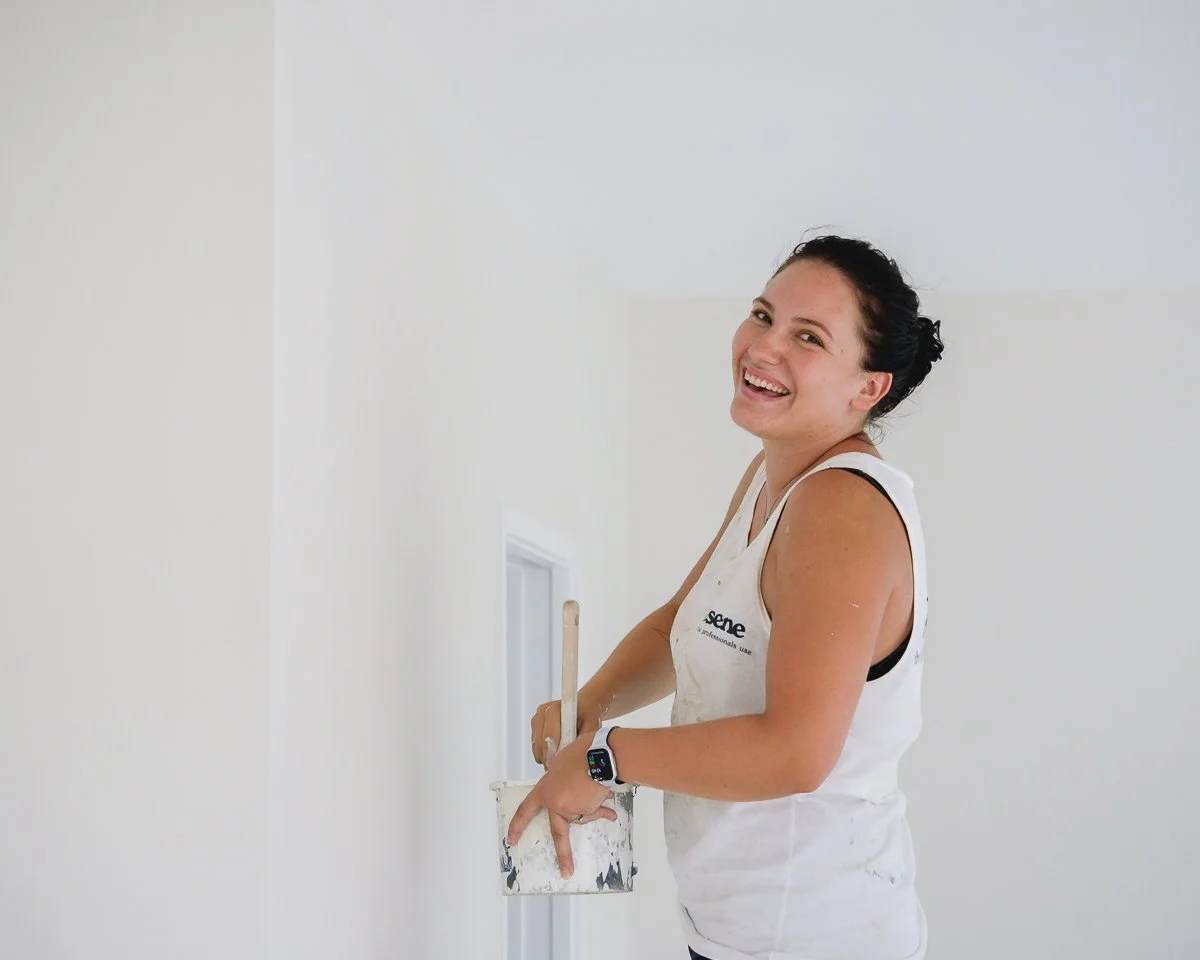

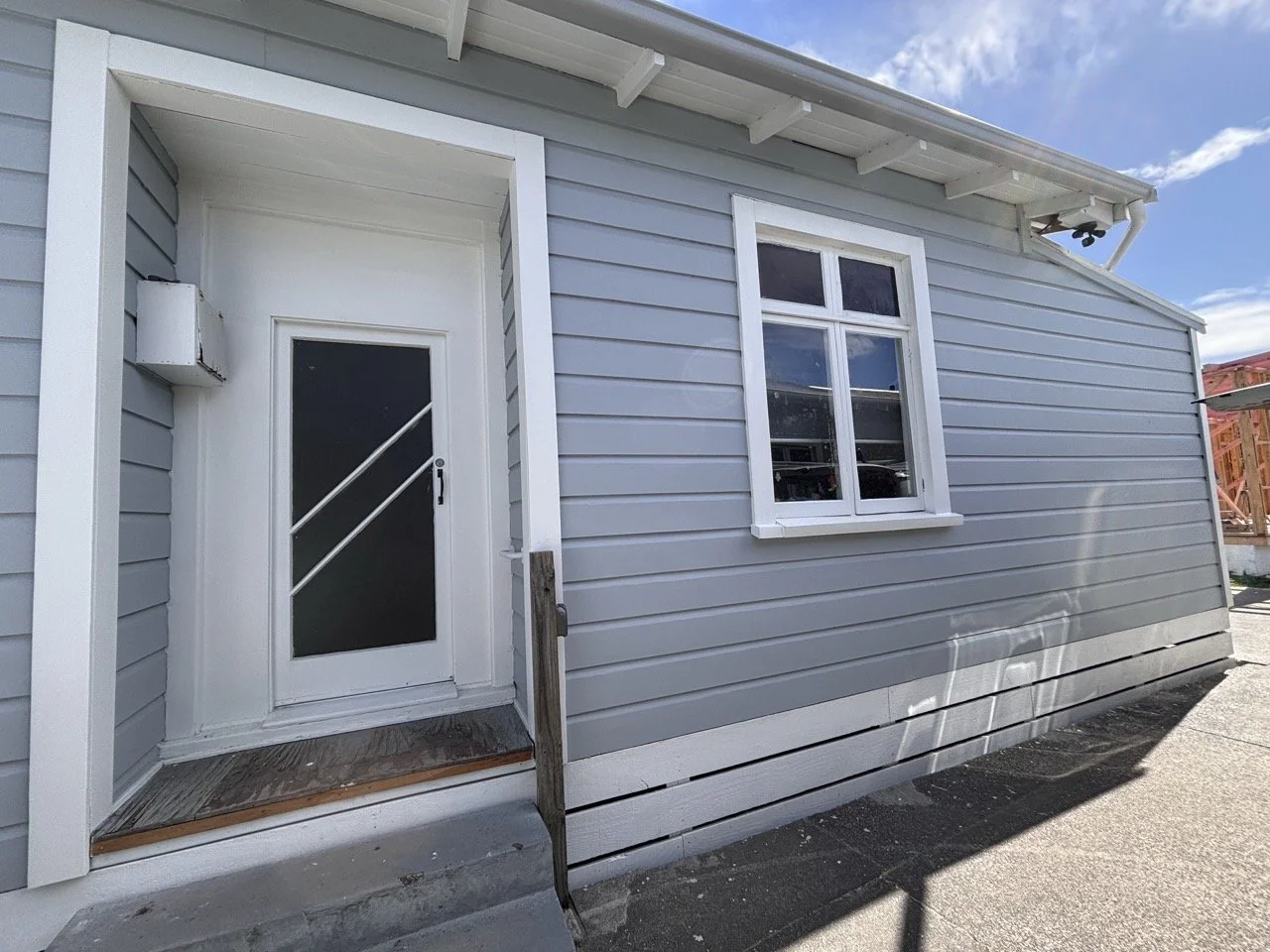
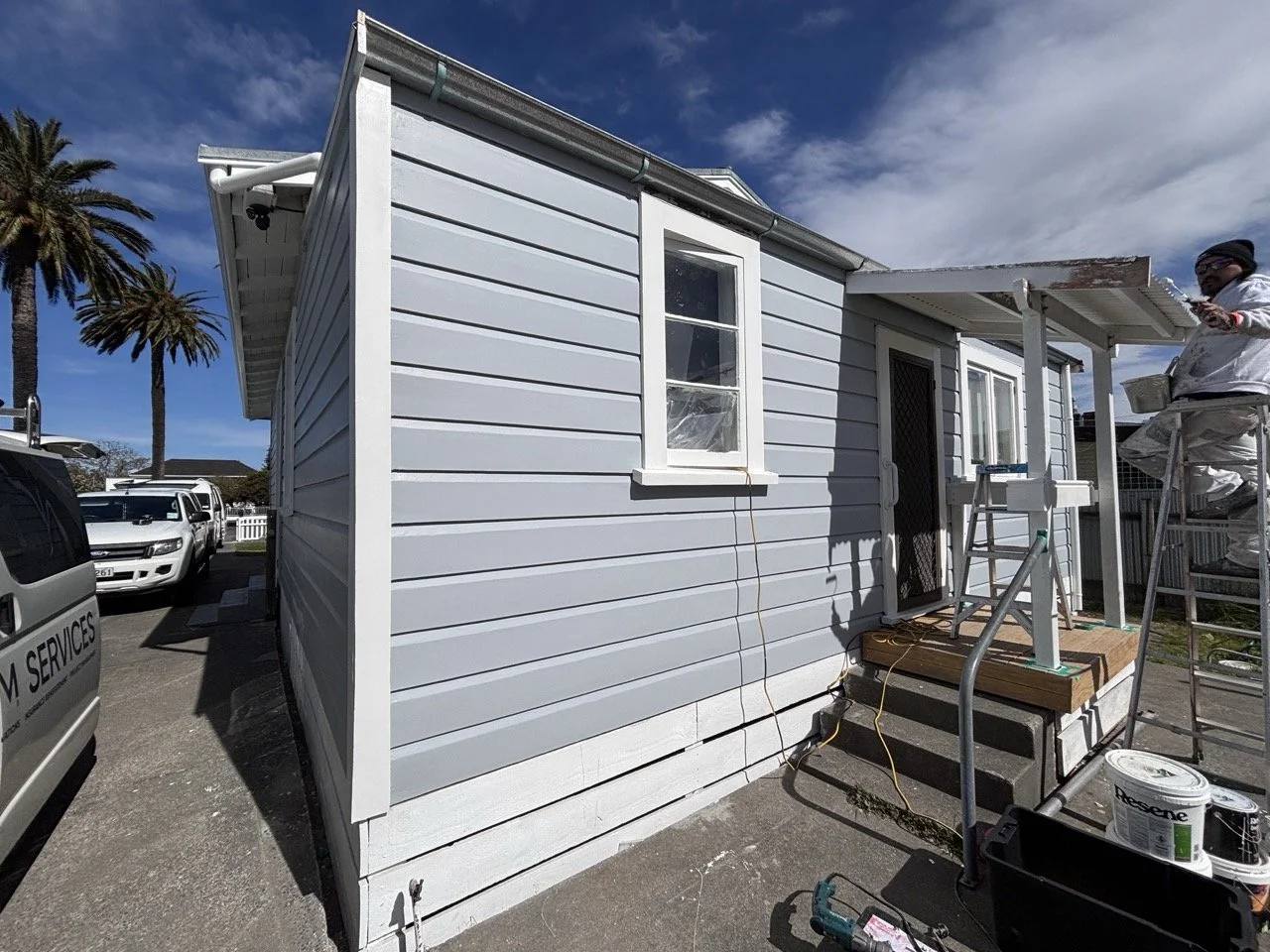
Tim repainting an early-1900s villa exterior in Napier.
By Nicole Howell · Last updated November 2026
How much does it cost to paint a house in Napier? Most full exterior repaints in Hawke's Bay run between $10,000 and $20,000 plus GST. Stucco homes start from around $6,000, while badly weathered villas needing a full strip-back can climb past $25,000. A three-bedroom interior usually sits between $10,000 and $14,000. What drives the number is the cladding and the condition of the old paint, far more than the size of your house.
I'm Nicole, and I write every quote that goes out of Bay Decorating. The question I get asked more than any other is some version of "what's this going to cost me?", and I can only answer it once I've had a look at what we're painting and what condition it's in.
Most people are surprised to hear that on a typical exterior, only about 30% of our time goes on putting paint on. The other 70% is prep, which means washing, scraping, sanding, filling, sealing gaps and priming, and that split is why two houses the same size can come in thousands of dollars apart. Below are the prices we typically see around Napier and the wider Hawke's Bay, and what pushes a quote up or down, so you can see where your place might sit.
The short answer: substrate, condition and prep
The price of painting a house comes down to three things, in this order: what your house is clad in (the substrate), what condition that cladding is in, and how much prep it needs before a brush touches it. A stucco home in good nick is the cheapest exterior we paint, and a weatherboard villa from the early 1900s with wooden sash windows and flaking lead paint is the dearest, with most jobs sitting somewhere in between. You'll find the full range of work we do on our painting services page.
What it costs to paint a house in Hawke's Bay
These are the house painting costs we typically see across Napier and Hawke's Bay, with every exterior row priced on a house of the same size.
| Job | Typical cost (excl GST) | What’s driving it |
|---|---|---|
| Stucco exterior | $6,000–$7,000 | Cheapest substrate. Power-wash and a thick roller; loose surface largely washes off |
| Weatherboard, good condition, aluminium joinery | ~$10,000 | Light sand, prime where needed, two topcoats |
| Weatherboard, good condition, wooden windows | $14,000–$15,000 | Adds window prep and re-puttying, which is a real chunk of extra hours |
| Weatherboard, deteriorated, some lead, serious stripping | $16,000–$20,000 | Failing paint and lead-safe removal before anything goes on |
| Weatherboard, badly degraded, full strip to bare timber | $25,000+ | Everything comes back to raw timber and starts again |
| Interior, three-bedroom | $10,000–$14,000 | Walls, ceilings and trims on a home of around 140 m² |
| Roof repaint | $6,000–$8,000 | By size and type; around three days’ work, with paint alone often over $2,000 |
About these figures
The exterior ranges above are for our most common job, a single-storey home of around 100 m², three bedrooms, weatherboard with a tin roof, on a reasonably accessible section. That's the closest thing we have to an "average" Hawke's Bay house.
Every figure is plus GST and includes the paint. A bigger home, a two-storey site or tricky access will push the price up, but these figures should give you a realistic starting point.
Napier, Hastings and the rest of New Zealand
Prices barely change between Napier and Hastings, and in our experience Napier sits about mid-range compared with the rest of the country. Our house sizes and cost of living are a little under the big-city averages, but the prep takes the same hours wherever the house is. If you've got two quotes for the same house that are miles apart, we dig into why in the real difference between a $10k and a $20k paint job.
What actually moves the price
The substrate
What your house is clad in sets the floor. Stucco is the most forgiving, because we can power-wash it, treat any flaking and roll it with a thick roller. Weatherboard takes longer because every board edge, gap and join needs attention, and timber moves with the weather in a way plaster doesn't.
Condition and prep
If your paintwork is sound and just needs a wash, a light sand and fresh topcoats, that's the best case for your quote, but if it's failing, the job changes completely.
As a rule of thumb, once around 40% of the old paint is flaking, the paint system has failed and we recommend taking the surface back to bare timber. We'll re-quote at that point rather than paint over the problem, because new paint on a failing surface usually only buys you a year or two before it lifts again.
We also use Resene's CS1–CS4 condition scale, a standard rating for how sound the existing surface is, so you know what to expect before we start. A near-new surface (CS1) can give you ten years, and a fair one with some bare patches that needs prep and spot priming (CS3) is more like six. A poor, exposed substrate (CS4, like our Kennedy Road villa) might only give three however good the paint is, and we'd rather you knew that before you spend the money than after.
Joinery and windows
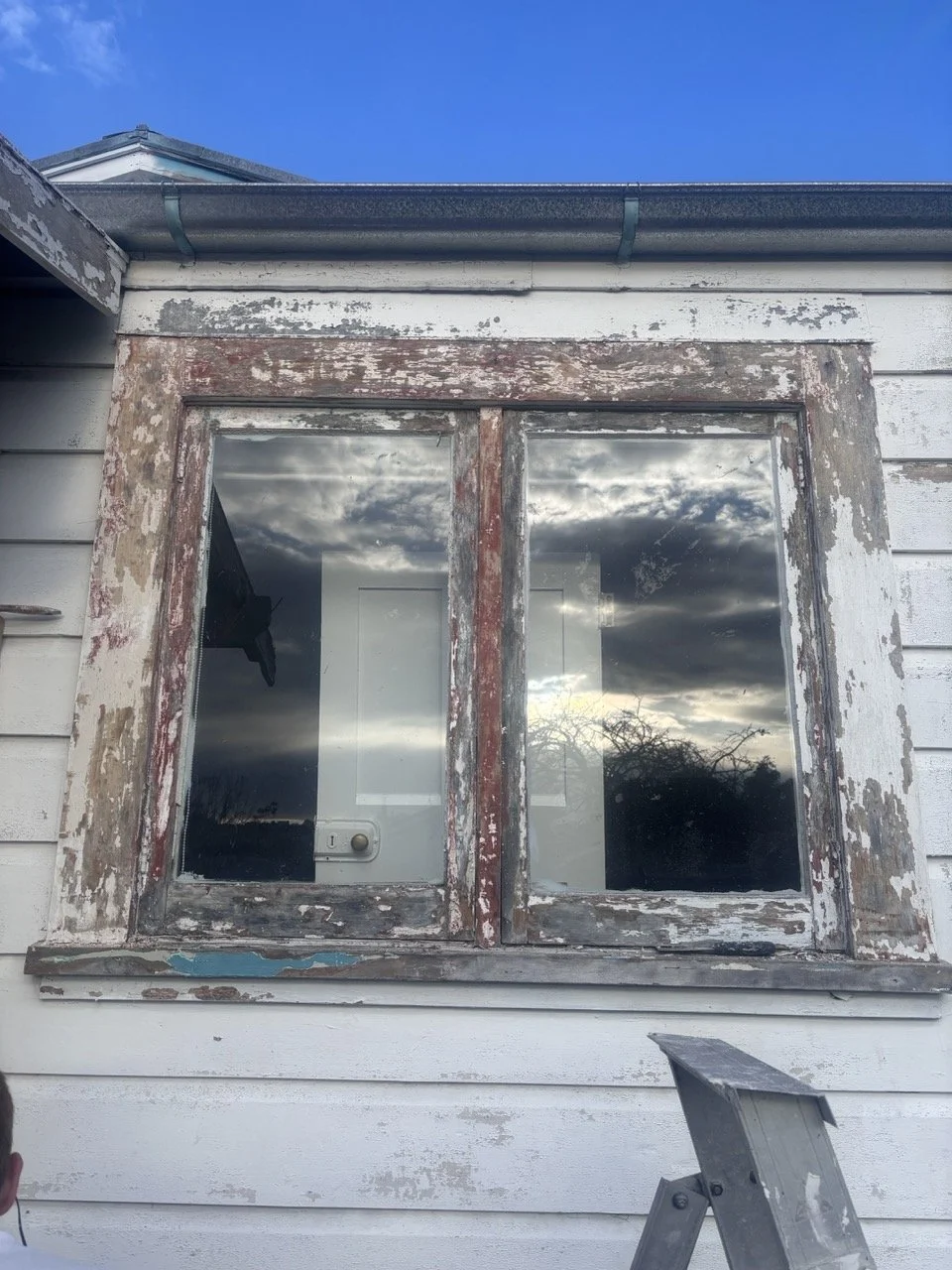
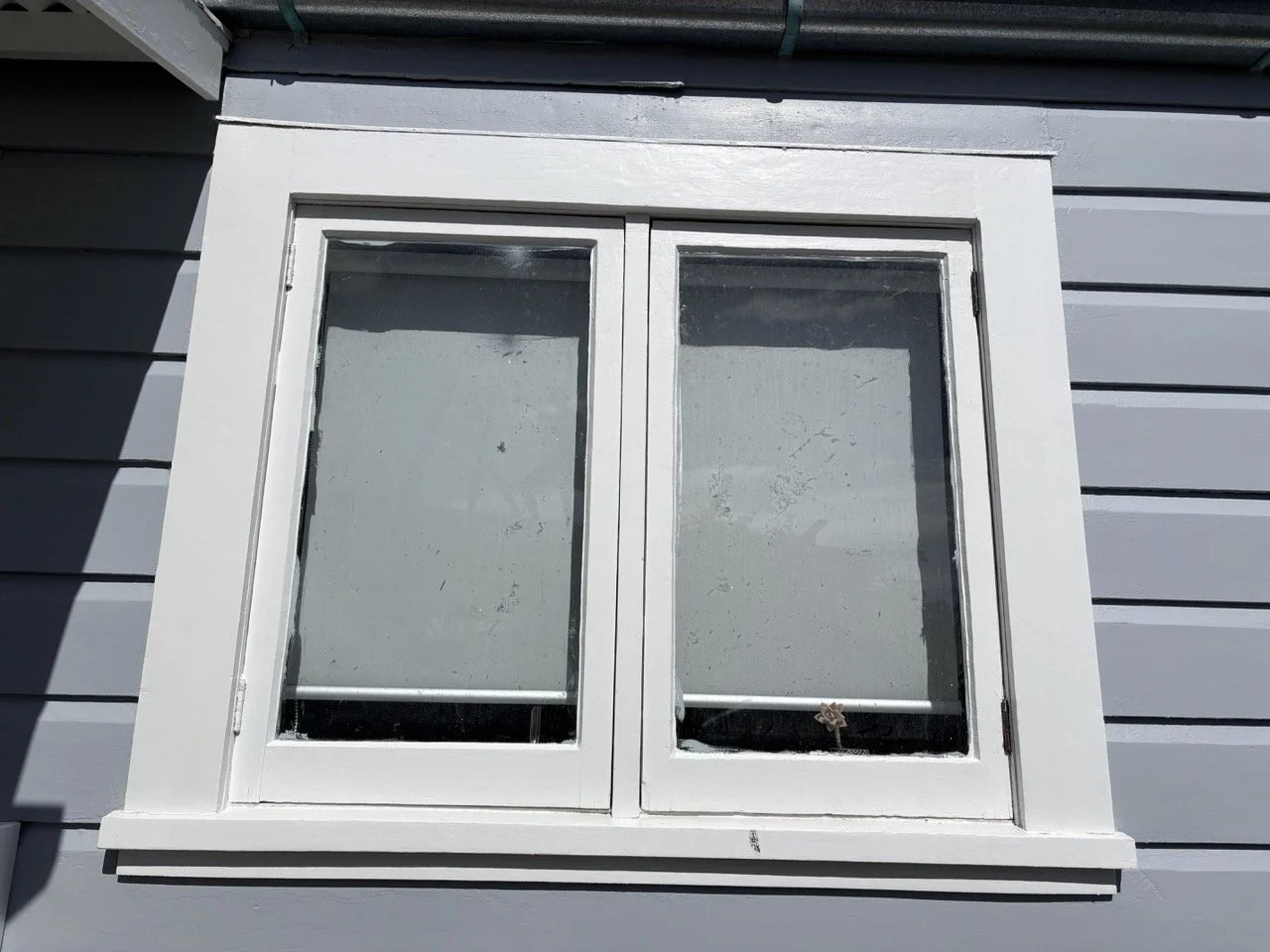
Aluminium joinery is quick, because we just mask it and move on. Wooden windows are a different story, as they need sanding, sometimes stripping, and re-puttying wherever the old putty has dried out and cracked. We include re-puttying as a line item in our quotes so it's there from the start, where some painters don't price it in and it surfaces later. On a villa with a dozen timber windows that work alone can add days, and on one job we expected 60 to 70 hours just on the windows.
Lead paint
Homes built before the 1980s often have lead-based paint underneath. It can't just be sanded off in the open, because the dust is the danger, so it has to come off first with proper containment and disposal, which is slower. We test for lead with a Resene lead test kit when we come out to quote, so it's in the price from the start.
We use a Paint Shaver Pro, a grinder with a vacuum attached, which catches nearly all the dust as it strips the boards back. Not many painters in Hawke's Bay have one, and Jesse runs ours. Full lead removal across weatherboards and joinery can add $6,000–$7,000 to an exterior repaint.
Size, access and the coast
Bigger houses take longer, but access is often what swings the price. Tight sections, steep sites, stairs up to the house and homes on more than one level may need built scaffold. Near the water, around Napier Hill, Napier South or the bays, salt air is hard on paint and roofs, so coastal homes need more time on rust treatment. The sun is harder on paint here than the salt, though, and north-facing walls cop the most of it, so those walls usually come round for a repaint sooner.
The paint you choose
Paint is a smaller part of the total than most people guess, usually around $1,500 for an exterior and $2,000 for an interior. We almost always use Resene because it's good quality paint made for New Zealand conditions, and it lasts here.
Cheaper warehouse paints can run about 35% less, but they're thinner, so you need more coats, and they don't stand up as well to our sun and salt. Once you count the extra labour and the shorter life, they usually end up costing you more than they save.
The colour
Our quotes assume a colour darker than white. A white or a light colour can need a third or even a fourth topcoat to stop the old colour showing through, so if you're going light, we'll re-price the job for those extra coats. On the Herrick Street new build in Marewa, the owners changed the colour after two coats were on, and the sand and re-coat came to about $700 in added hours. That's why we suggest settling the colour with us before the first coat goes on, as it saves you money in the end.
What's included in a Bay Decorating quote, and what isn't
Our quotes are itemised, with windows, weatherboards, eaves and fascia, and water blasting each on their own line, so you can see exactly what you're paying for before you commit. Plenty of clients are happy to water blast their own place to save a bit, and our guide to painting a house on a budget covers the other parts we suggest owners can take on.
What's always included:
- All the paint
- Mobile scaffold where we need it
- Prep: washing, moss and mould treatment, scraping, sanding, filling and priming
What's quoted separately or excluded:
- Built (fixed) scaffold and roof edge-protection, which are a specialist hire when a job legally needs them
- Rotten timber that needs cutting out and replacing, which goes to a builder we recommend, with your okay first, rather than being painted over
Where the rot can be cleaned back to sound timber, we fill it ourselves with Repair Care, a two-pack epoxy timber filler, then shape, sand, prime and paint it with the rest of the job.
I try to make sure every quote covers the whole job as I see it at the site visit, and if something turns up that nobody could have seen, like rot under the old paint, we'll talk it through with you before we go any further.

Real local examples
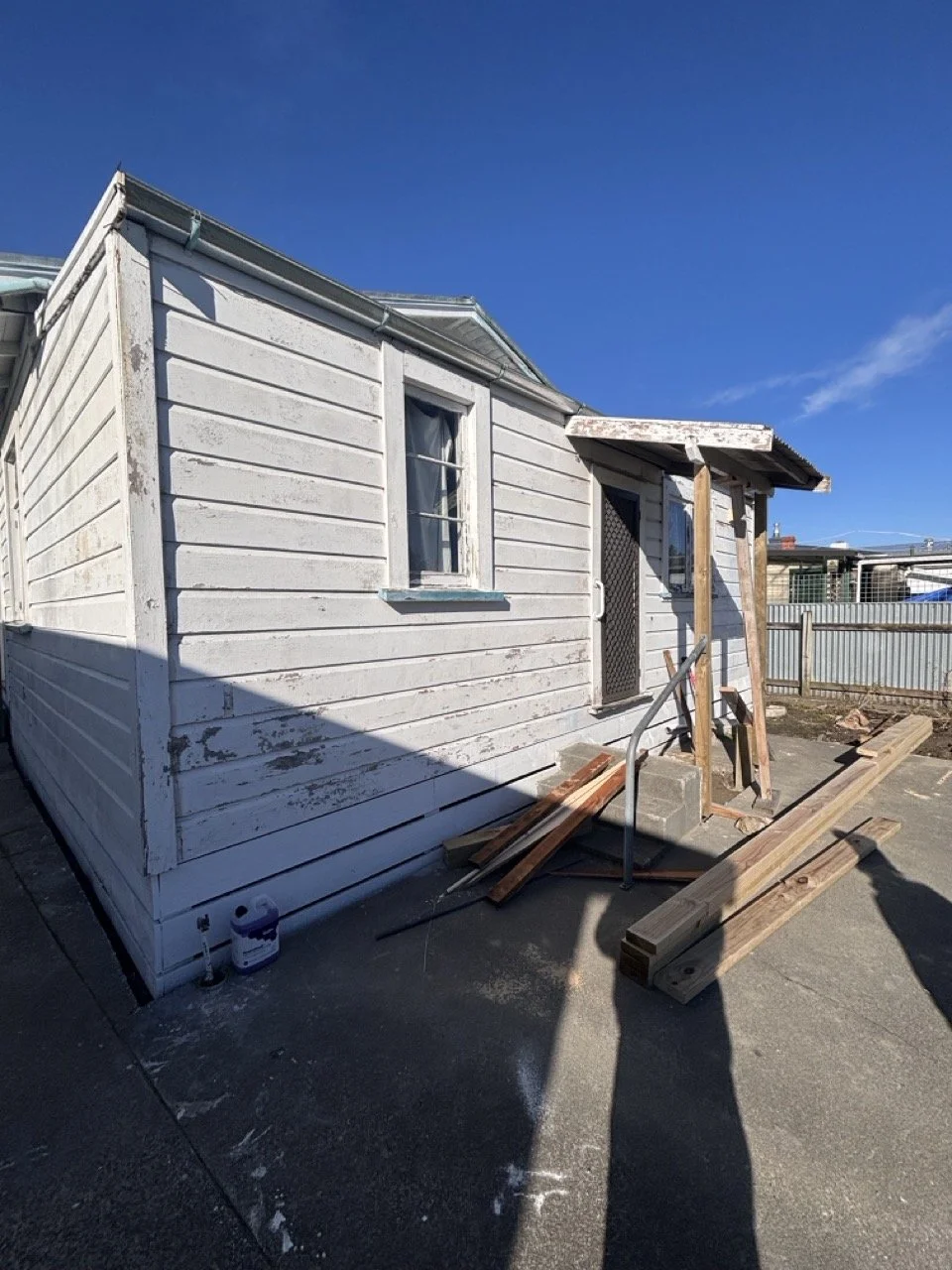
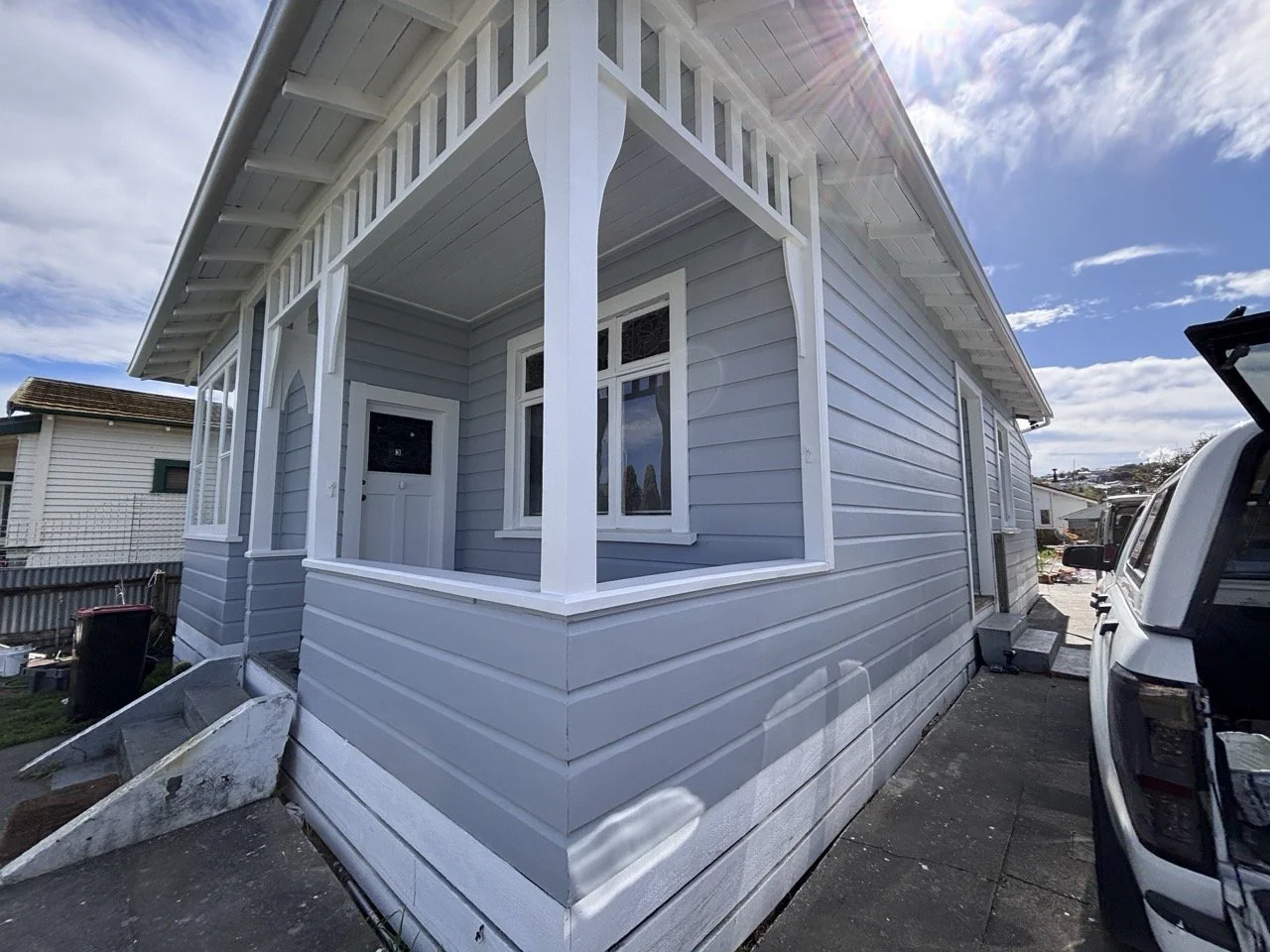
A full strip in Hastings. The Longlands villa in Hastings is one of the oldest villas in the area, and it needed the most work a house can, a full paint-shaver strip that took every board back to bare timber to be built up again coat by coat. That took about three months, from January to March 2026.
A standard weatherboard home. A tidy 1990s weatherboard place of around 135 m² came in at about $12,000 for an exterior repaint, which covered a sand, fill, prime and two topcoats.
A rescue to a firm budget. Our Coote Road repaint was a job another painter had walked off, with moss and mould on a shaded hill. We worked it to a firm $10,000 budget, kept it in the same colour, and used Resene Wintergrade because standard paint was staying wet overnight there. It took us about three weeks.
A character villa on Kennedy Road. At the other end of the scale, Kennedy Road is an early-1900s villa with severe weathering and lead paint on the boards and joinery, which puts it at the dearer end of our table, and the lead-safe removal added around $6,000–$7,000 on top. The windows were chemically stripped, and because it rated CS4, we agreed the three-year life from our condition scale with the owners up front. They live out of town, so we kept them up to date by video call.
A premium hill villa. An older villa on the Napier hill, with wooden windows and a lot of character detailing, came in at around $18,000, which is above our wooden-window range because of all that detailing.
A modern new build. A full interior and exterior repaint on a new build in Havelock North came to about $25,000. Even with everything new, filling the nail holes and sanding the cladding and trims takes real time.
How much does it cost to paint a house interior?
Most three-bedroom interiors in Napier sit between $10,000 and $14,000 on a single-storey home of around 140 m², depending on ceiling height, the number of rooms and whether you're covering a dark colour. We usually do ceilings and trims in a crisp white to frame the rooms. Our interior painting page has more on how we approach it.
The paint for a full interior runs to around $2,000, because there's a big surface area compared with an exterior, and interior Resene is about $200 for a 10-litre bucket. Basic plastering and filling are included, while a full skim coat or wallpaper removal is quoted on top.
Our advice for homeowners
If you're pricing up a repaint, here are two things we suggest.
- Your budget. When I come out for the site visit, feel free to let me know what your budget is and how much you'd be happy to take on yourself, and we can go from there. We can also stage a job into smaller chunks, a wall or a room at a time, with each stage invoiced as its own small job, so there's no need to do everything at once.
- Booking ahead. A big exterior is usually booked two to three months out and other work three to six weeks out, so we suggest getting in touch well before you'd like us to start. Winter can work too on the right day, and our guide to painting an exterior in winter explains what it takes.
Frequently asked questions
-
For a typical single-storey home, a full exterior repaint here comes to somewhere between $10,000 and $20,000 plus GST, set mostly by the cladding and the state of the old paint. A stucco home can come in at $6,000 to $7,000, and a villa that has to go back to bare timber can top $25,000.
-
For an average single-storey weatherboard home in good condition, you’re looking at around $10,000 with aluminium joinery, or $14,000–$15,000 with wooden windows that need re-puttying. Heavier prep and lead removal push it higher.
-
Yes, usually. Stucco is the cheapest exterior we paint, around $6,000–$7,000 for a typical single-storey home, because it preps quickly and rolls fast, whereas weatherboard takes longer, board by board.
-
For the outside, our price table is built on that house, a single-storey, three-bedroom weatherboard home of about 100 m², so you’re looking at anywhere from about $10,000 to $25,000 or more plus GST, depending on its condition and the joinery. For the inside, a three-bedroom home is usually $10,000 to $14,000. In our experience Napier sits about mid-range for New Zealand, so it should be a fair rough guide elsewhere too.
-
It can be, if you take on the right parts. Moving your own furniture and taking the blinds down takes about five to six hours off the job, roughly $400 to $500, and some owners go further with a prep-only job, where we do the prep and they usually paint one base coat and two topcoats over it. We recommend leaving the sanding, filling and priming to us whatever the budget, because that’s where a lot of the skill and the hours sit.
-
Yes. On an older home, taking the lead paint off with the dust contained and disposed of properly can put another $6,000–$7,000 on the exterior quote.
-
Our mobile scaffold is included in every quote, because it’s our own gear. Fixed (built) scaffold and roof edge-protection, where a job legally needs them, are a specialist hire and quoted separately.
-
It depends on the surface and where the house sits. On a sound surface, a well-prepped exterior should last about 7–10 years inland and 5–7 years near the coast or in heavy sun, north-facing walls especially, and less where it starts in poorer condition on Resene’s CS1–CS4 scale. Our guide to how often to repaint a house exterior in Hawke’s Bay walks through the signs to look for.
-
A tidy, well-prepped exterior should lift a home’s presentation before sale and can reassure buyers the place has been looked after. We can also stage the work to focus on what buyers see first, and we do pre-sale work to the same standard as any other job.
Getting a quote
If you'd like a quote for your place in Napier, Hastings or Havelock North, give us a call. Quotes are free and no-obligation, and I'll come out and see the house in person before I price anything. We reply to every enquiry within 24 hours. You can also see the kind of work we do on our exterior painting and villa and heritage painting pages.
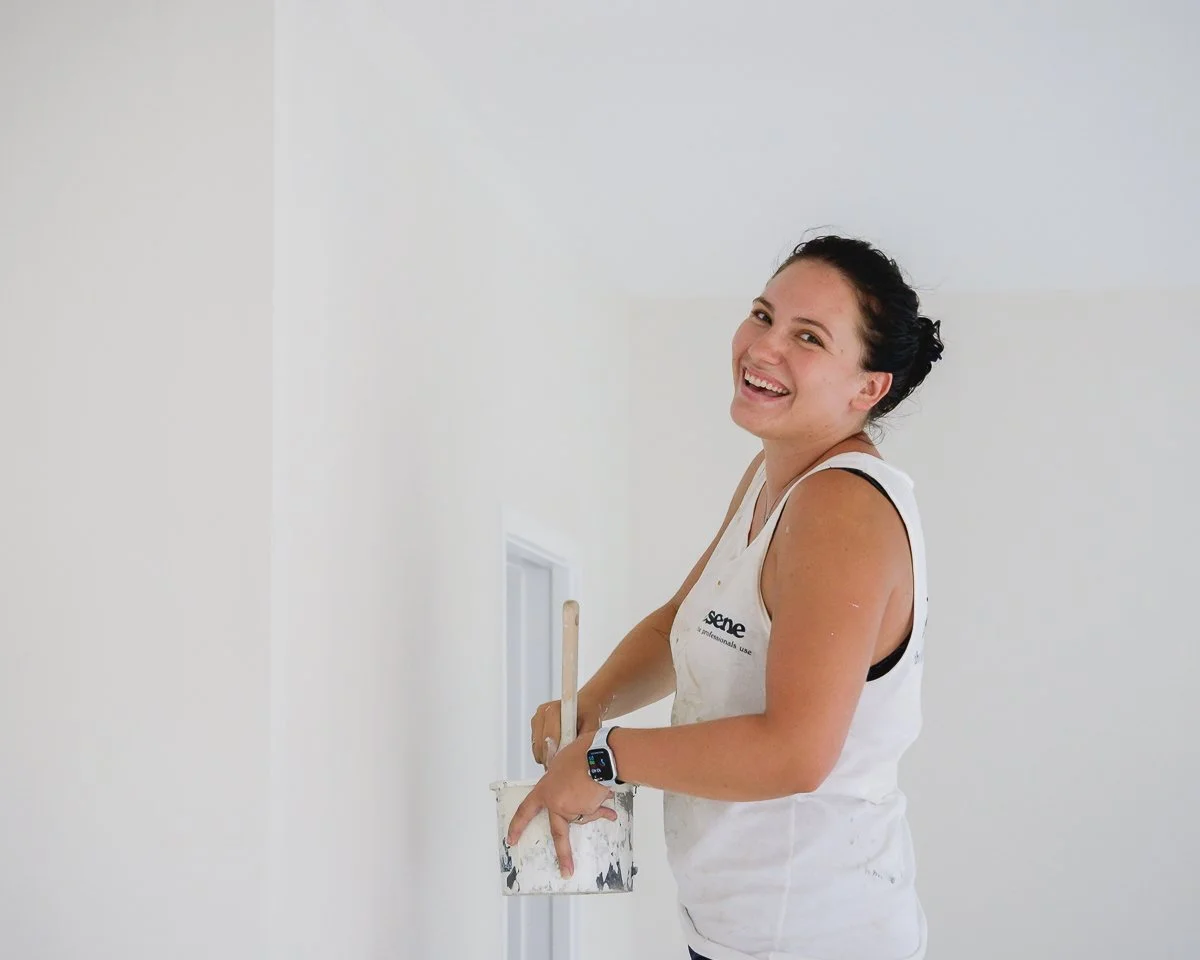
Author: Nicole Howell — Co-owner, Bay Decorating
I co-own Bay Decorating with my husband Tim, here in Napier. I look after the quoting, the site visits, and the quality check on every job, so I'm usually the person you'll deal with from your first quote through to the final once-over. The thing I care about most is clear, no-jargon communication. I've been the homeowner stung by a renovation that ran thousands over budget, and I never want a client of ours to feel that. These articles are me passing on what actually goes into a good paint job in Hawke's Bay.