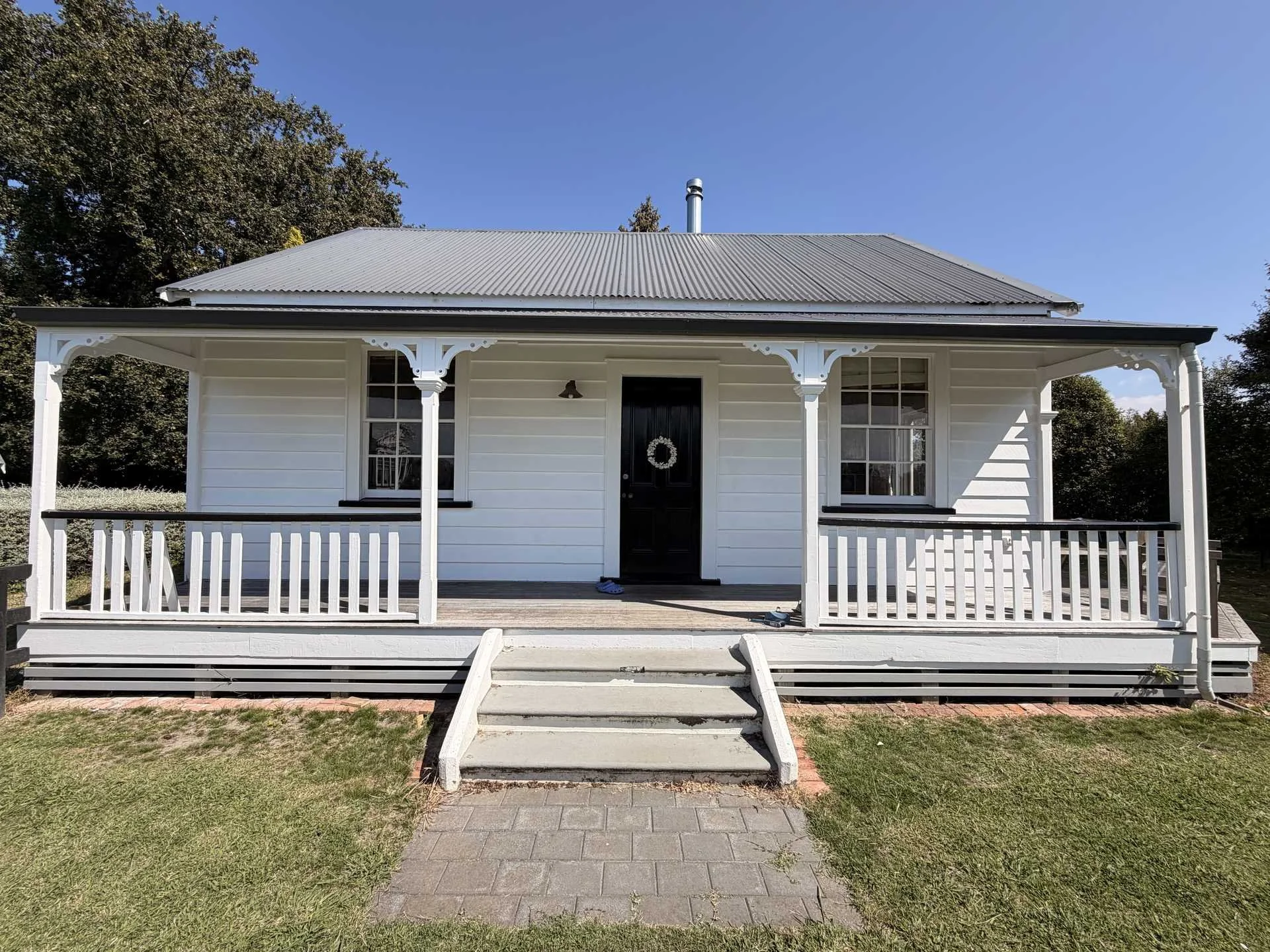
Heritage Villa Restoration — Longlands, Hastings
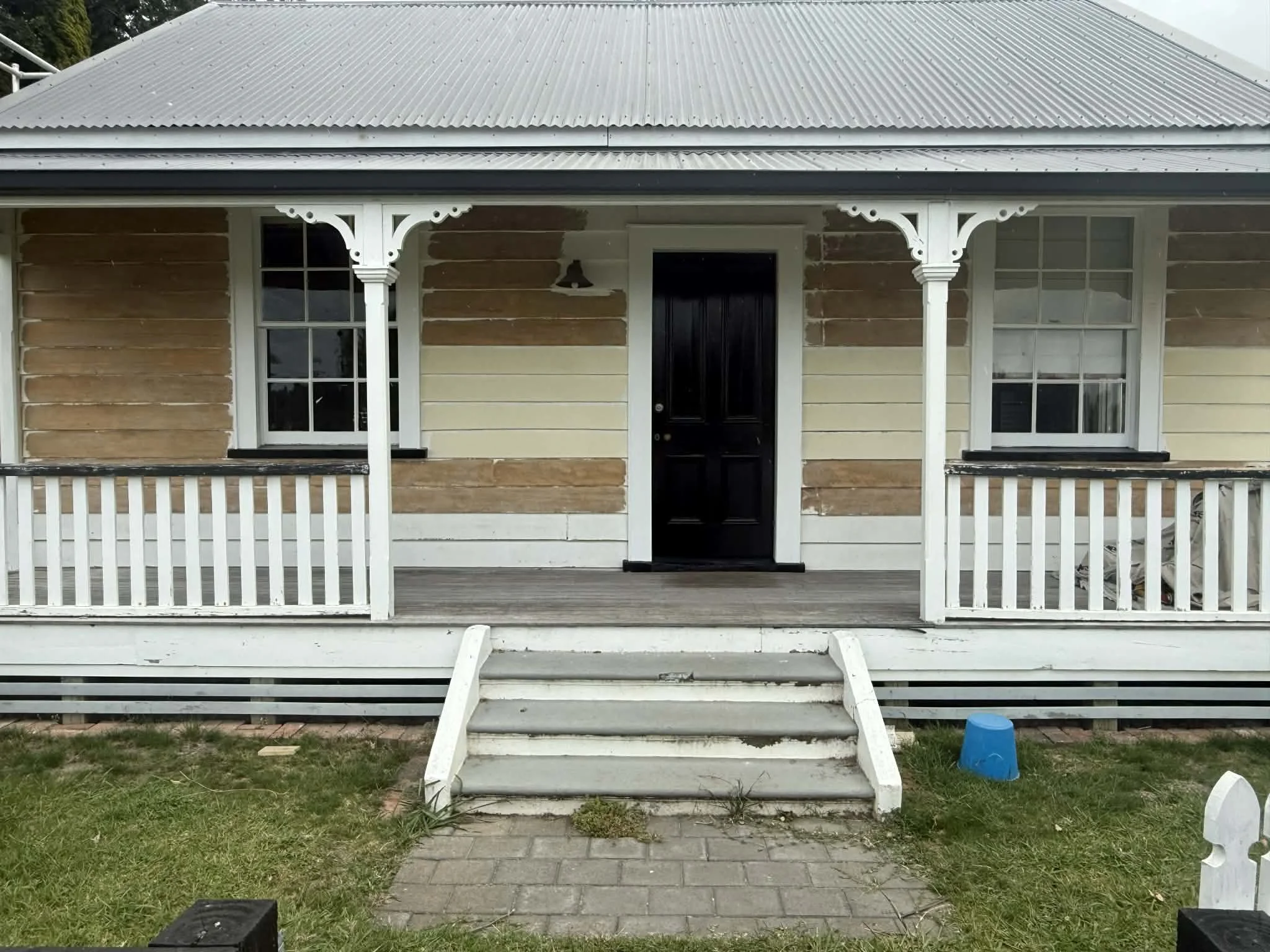
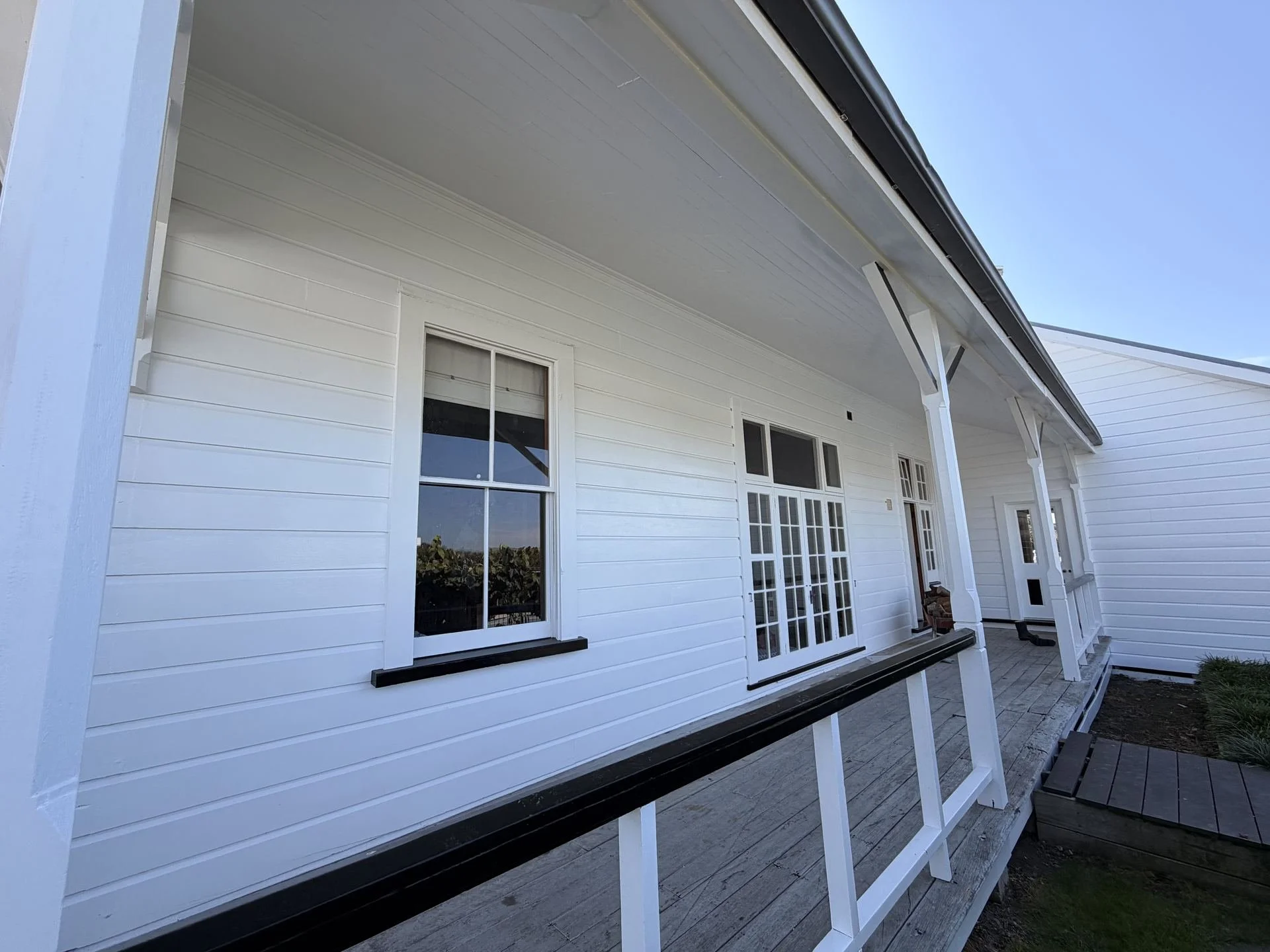
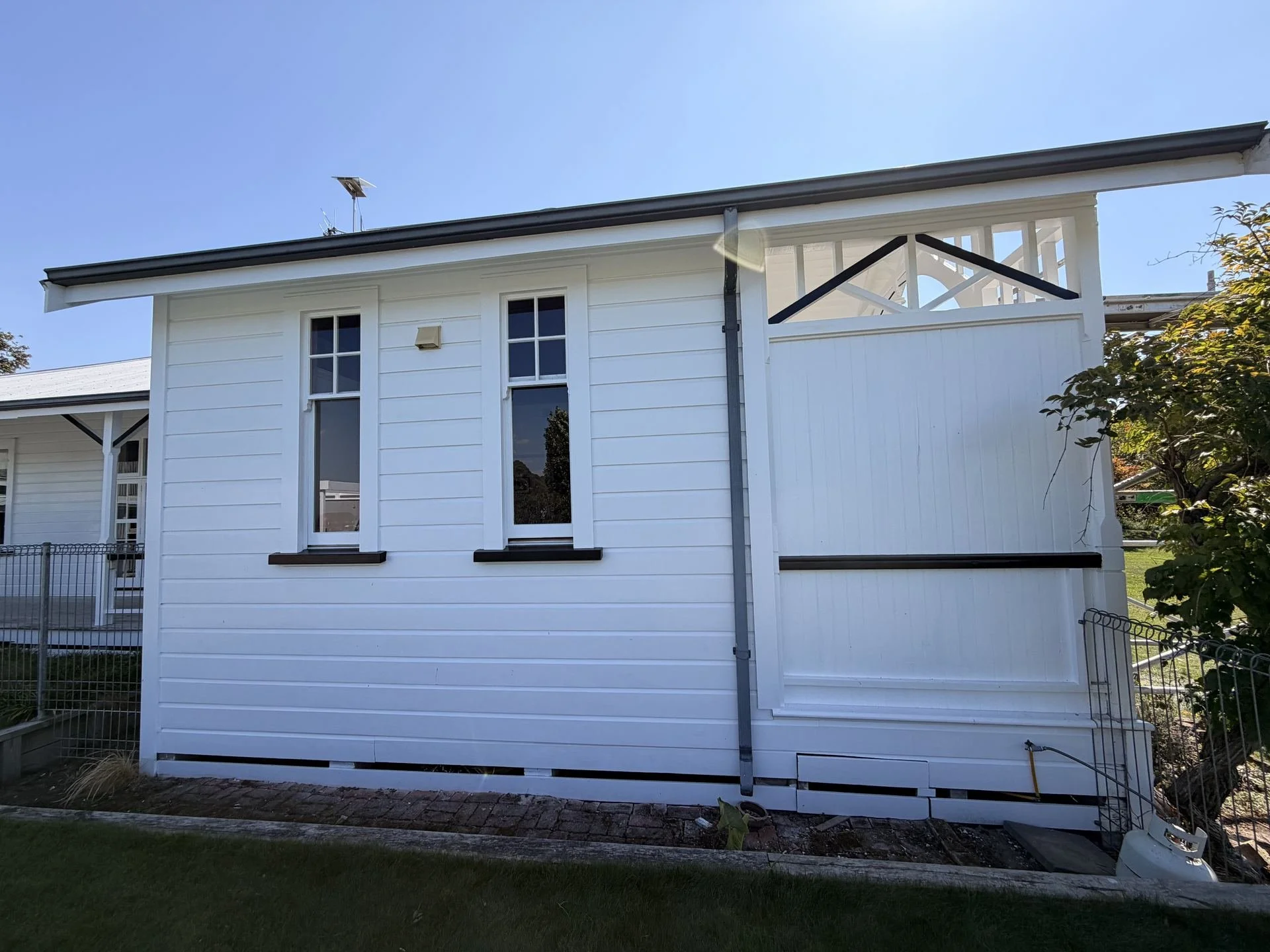
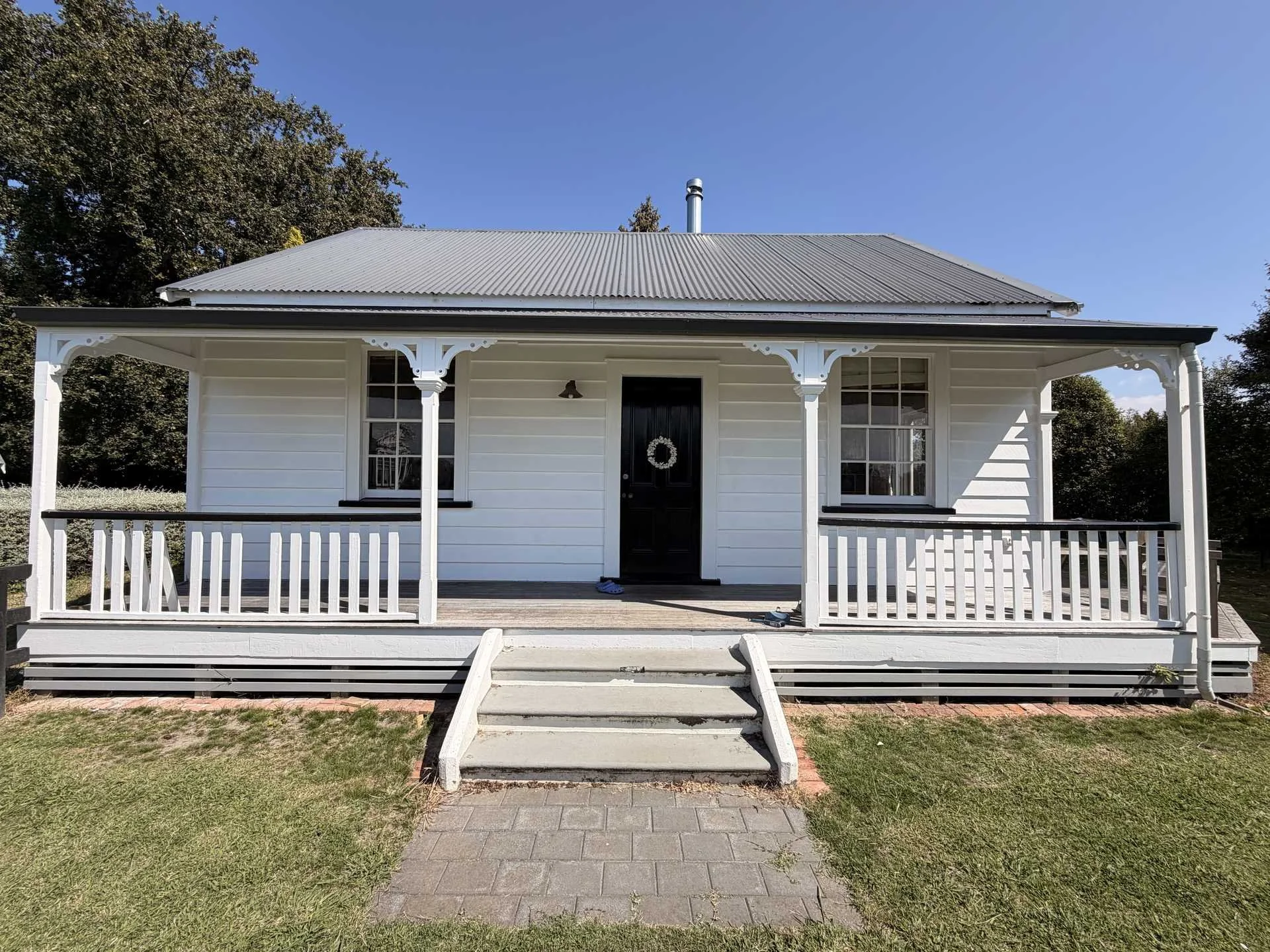
Longlands is home to one of the oldest villas in Hastings, and when the owners first called us, all they wanted was a refresh coat. Once we got up close we could see there was a genuine heritage home under there, worth doing properly. So rather than paint over a tired old finish and lock all its problems in, we offered to take the cottage section right back to its roots and restore it. They were keen, and over three months from January to March we gave it the full treatment. It's one of the jobs we're proudest of.
Restoring the weatherboards
Stripping back to bare timber
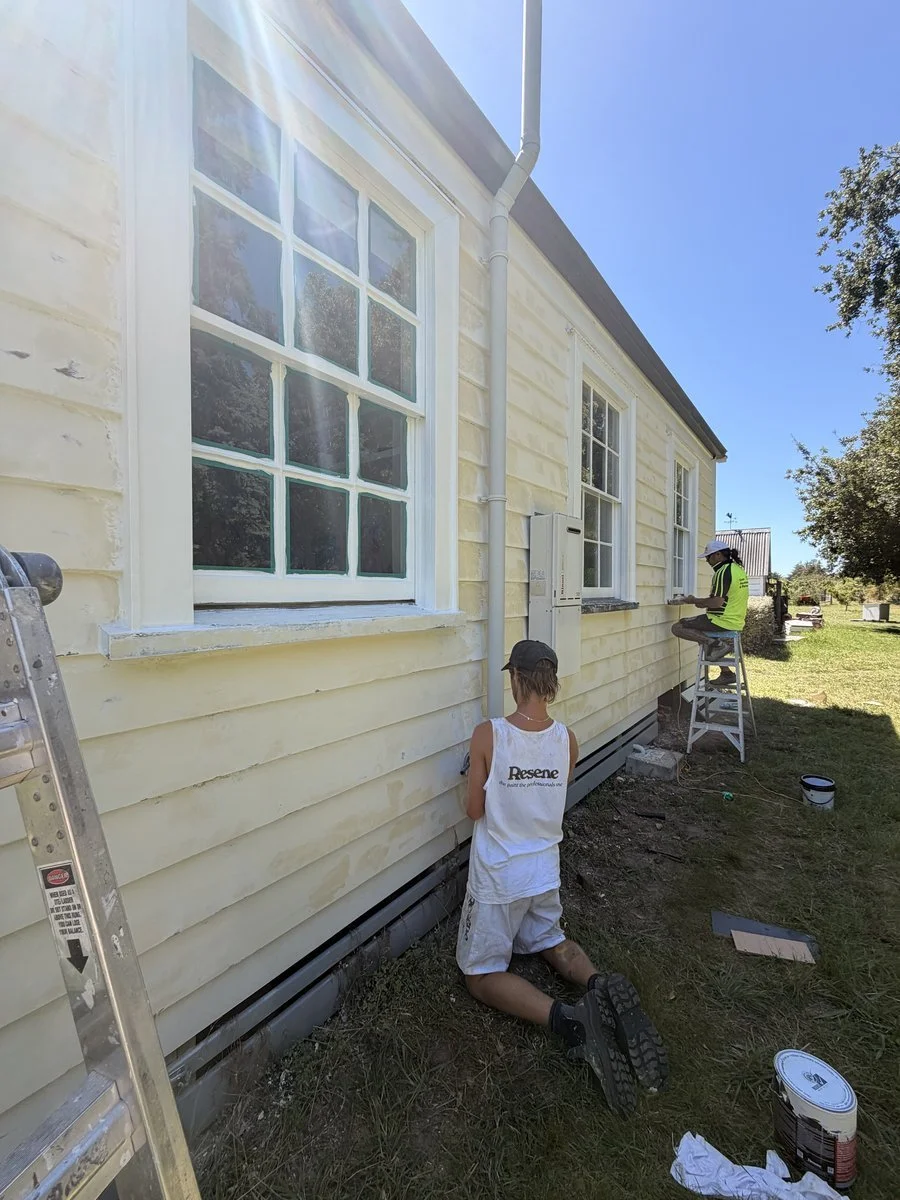
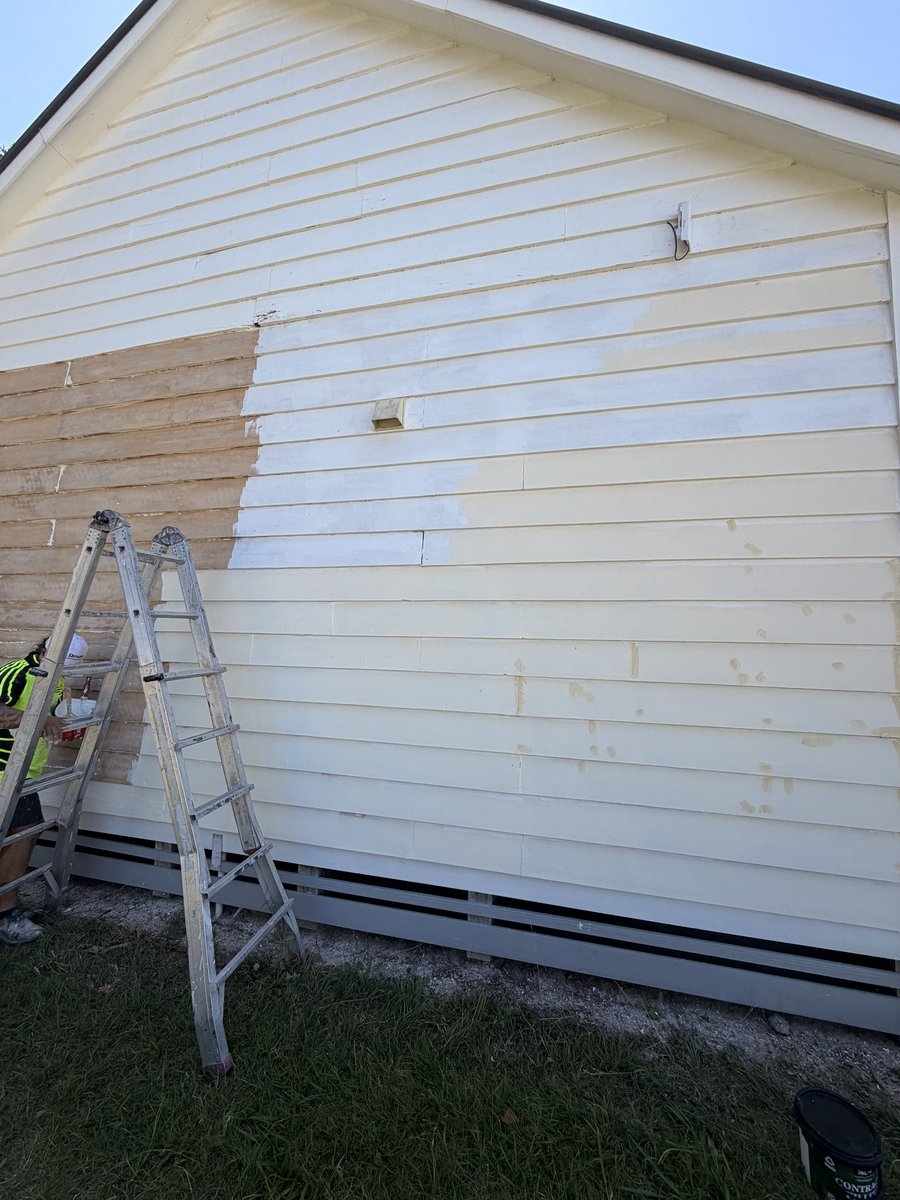
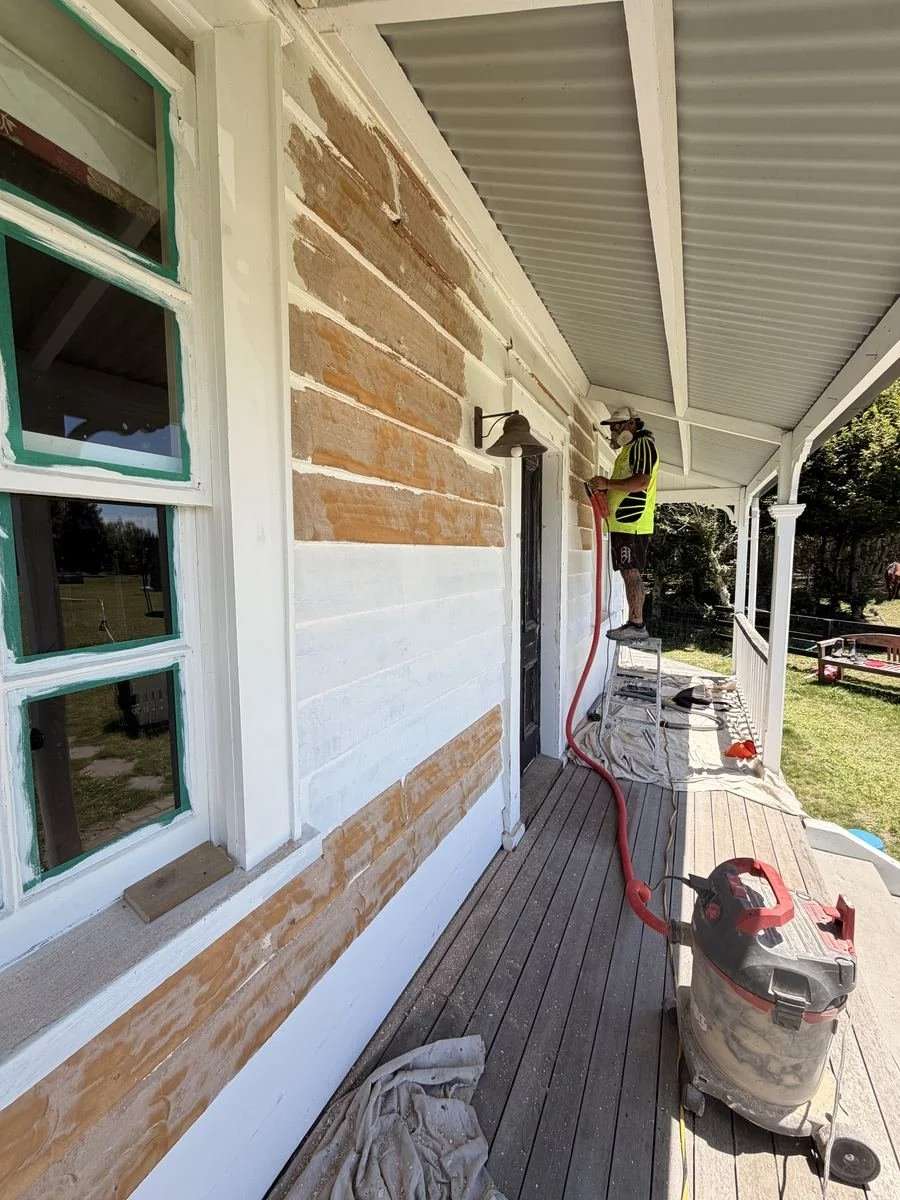
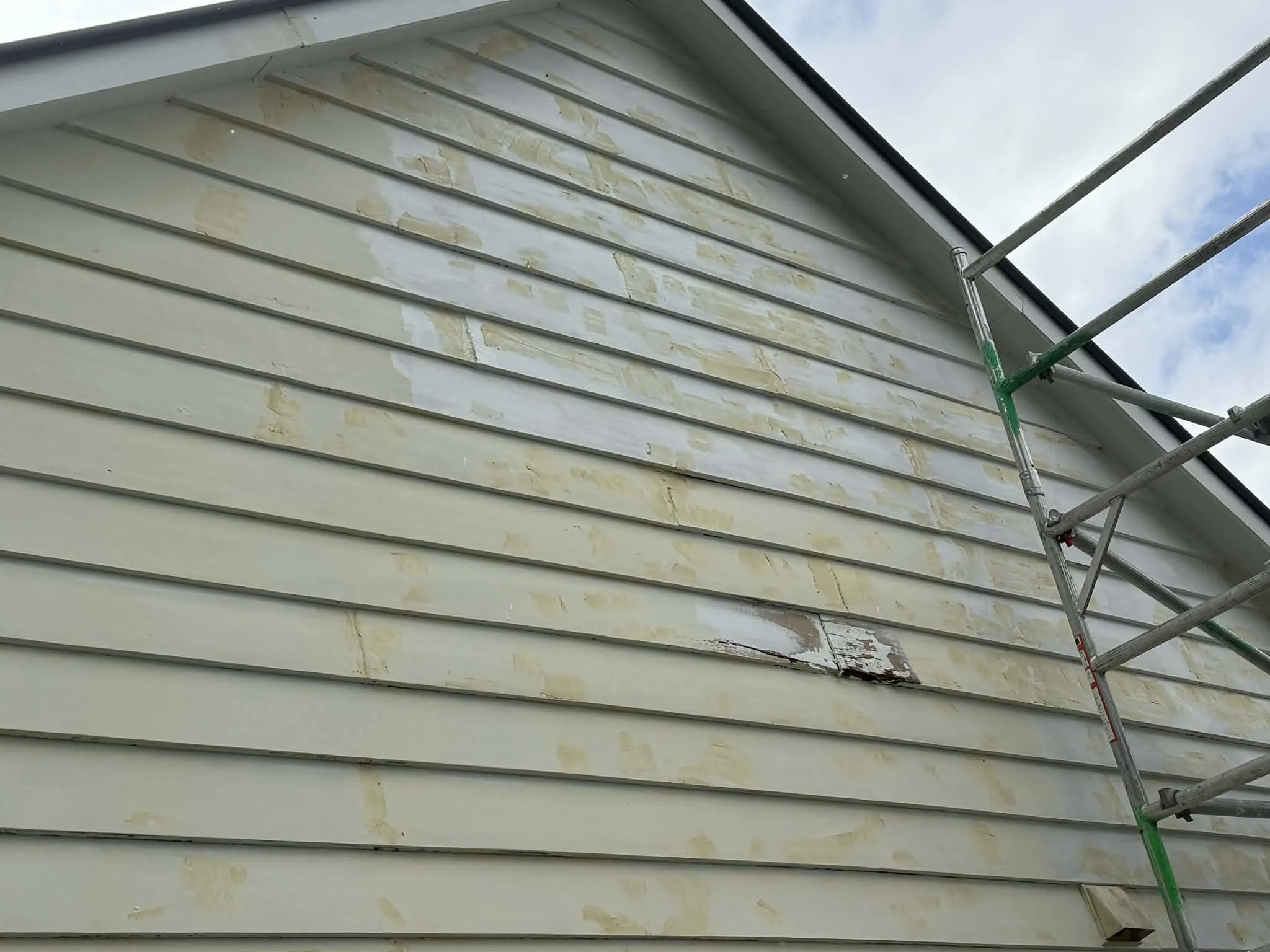
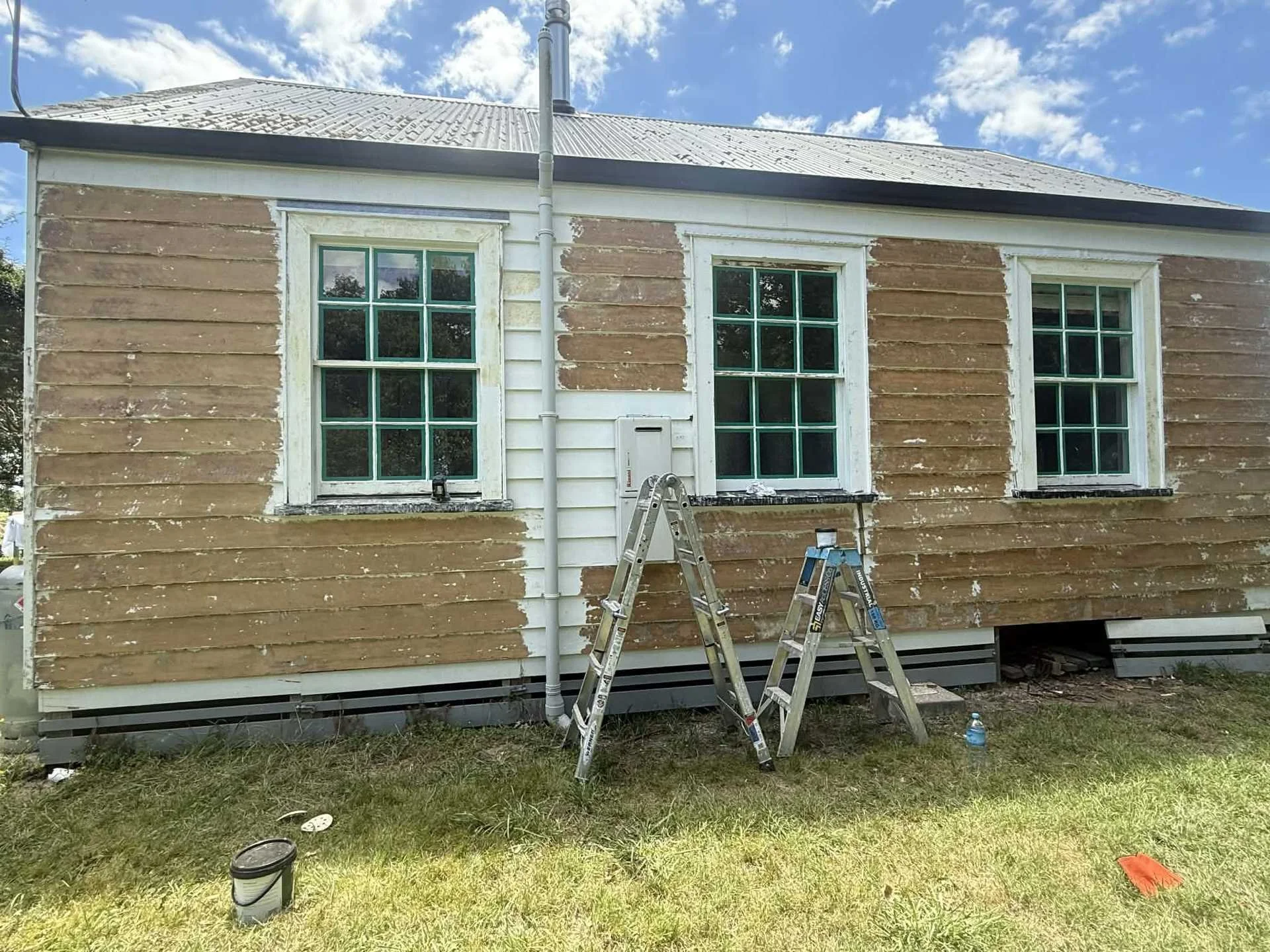
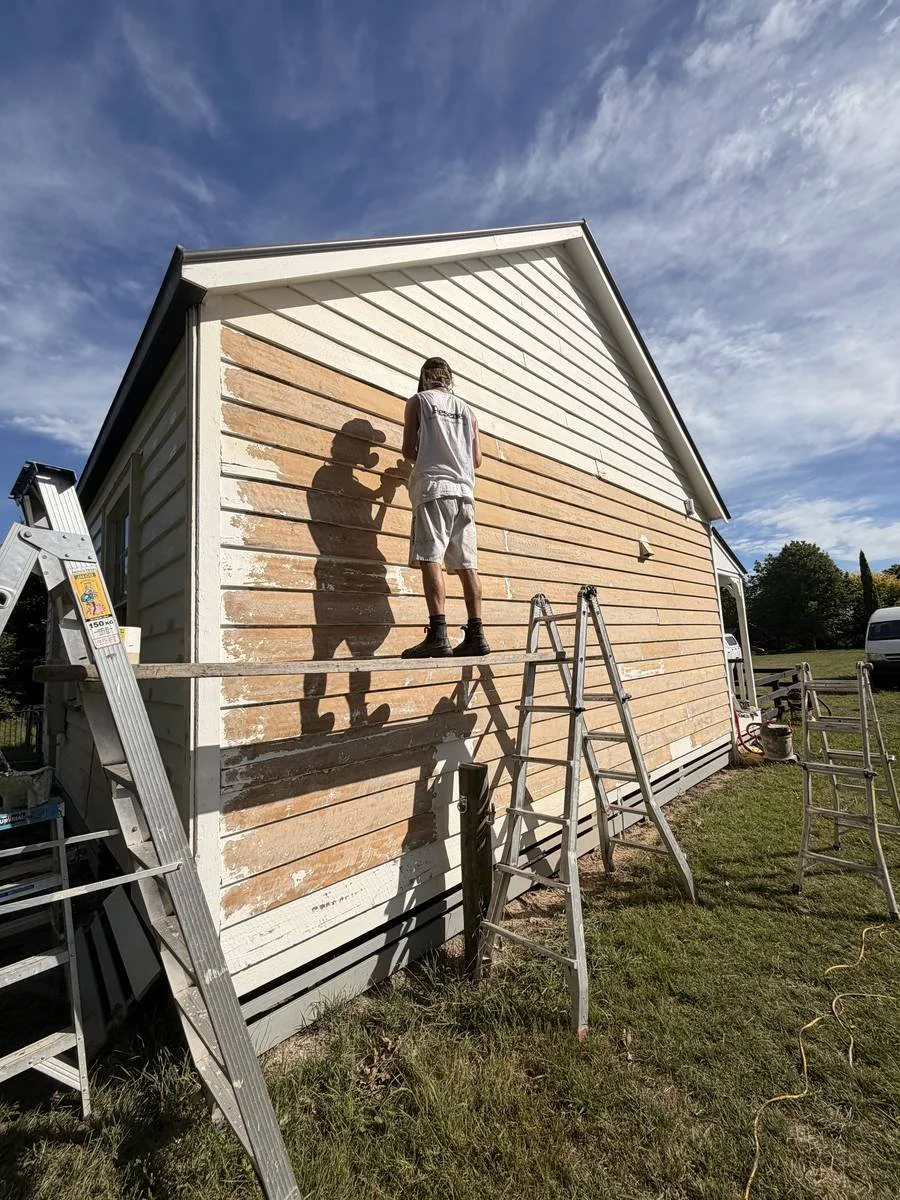
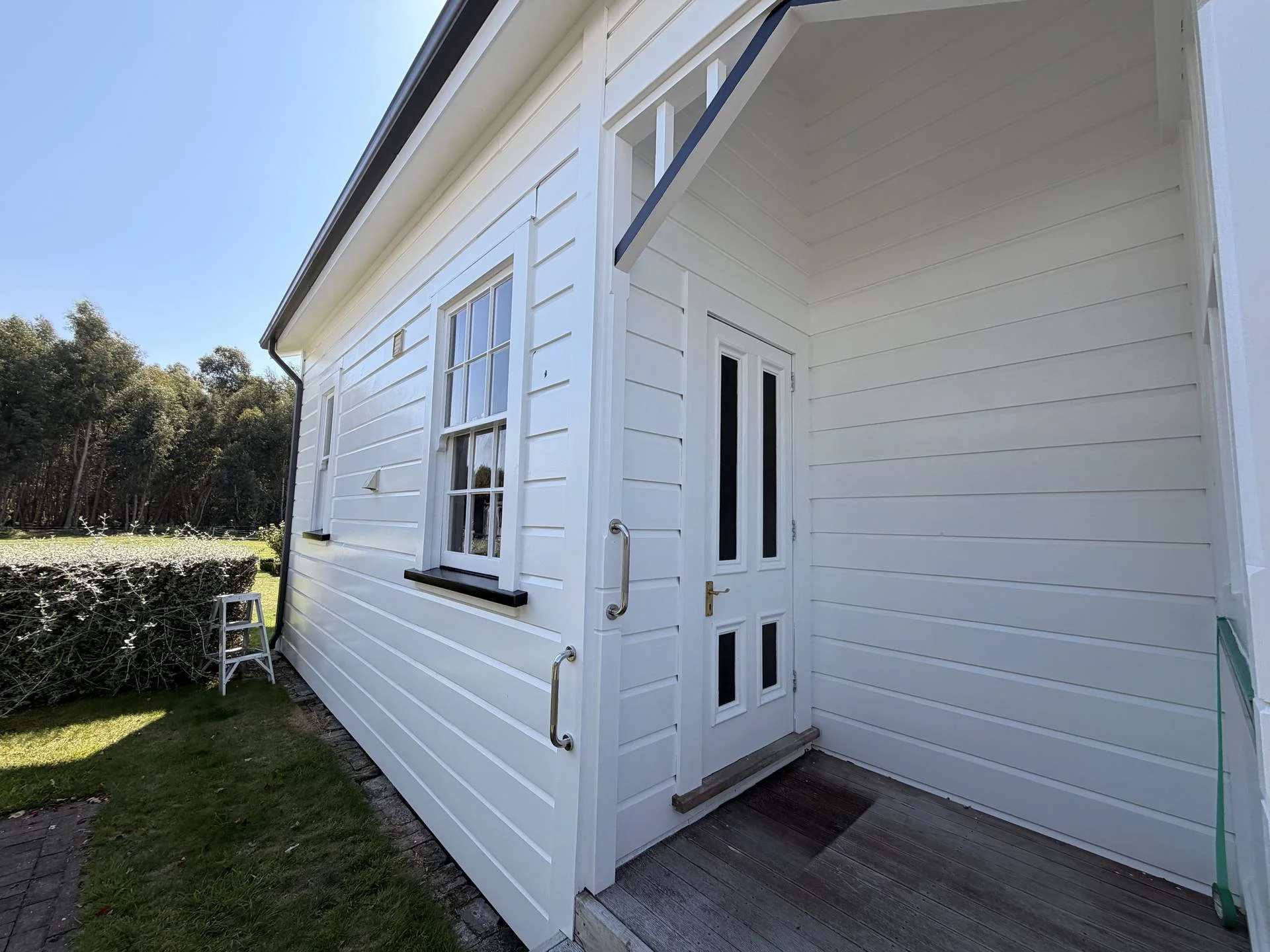
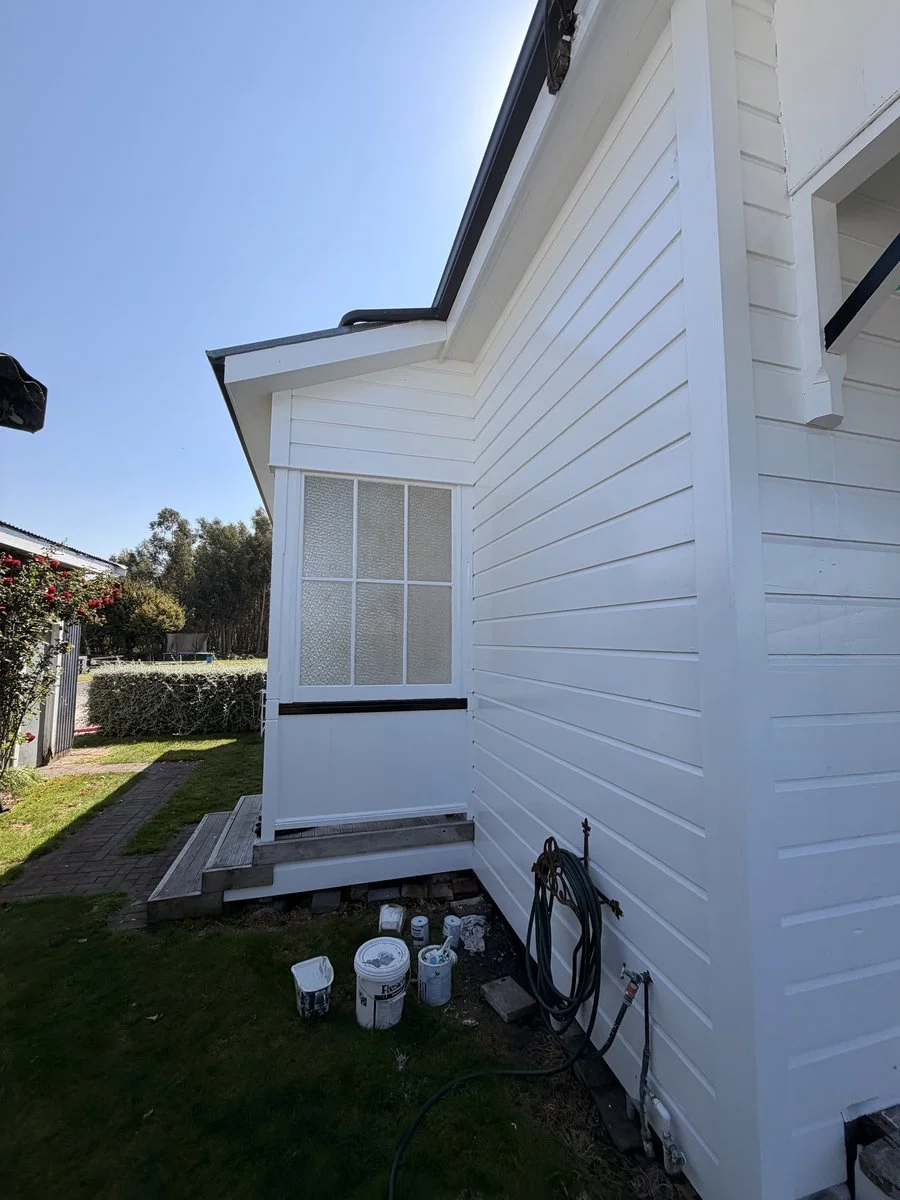
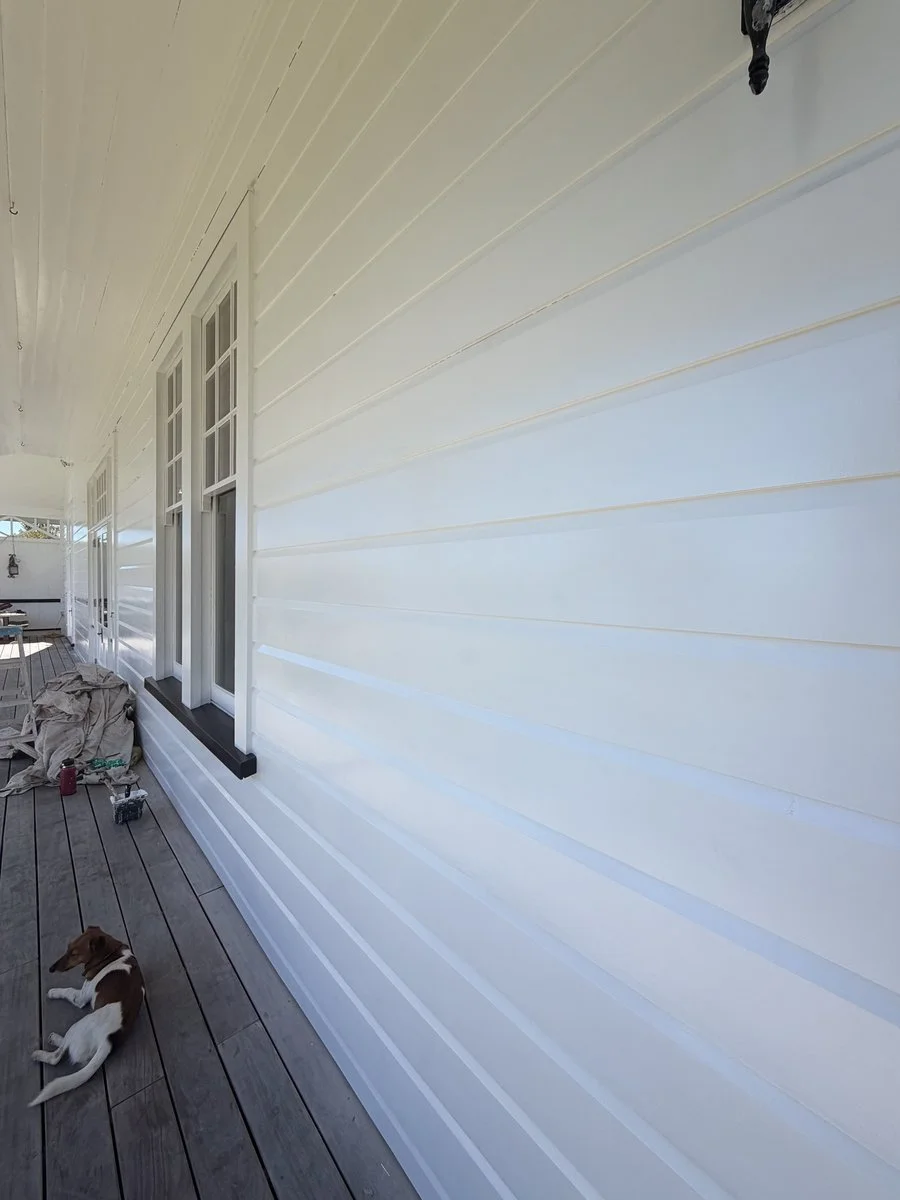
For years the weatherboards had been a faded yellow, and underneath the old paint the timber was worn and full of gouges from decades of Hawke's Bay weather. A quick coat over the top would only have sealed all of that in for a few more years. So we stripped the cottage section right back to bare timber using our paint shaver, a specialist grinder with built-in dust extraction that lifts old paint off cleanly without filling the site with dust. The owner had building experience himself, so while we handled the paint system he replaced the rotted boards and fitted soakers (small protective flashings) over the joins in the weatherboards. Between his carpentry and our paint system, the restoration's built to last.
Getting old boards smooth enough for a high-gloss finish
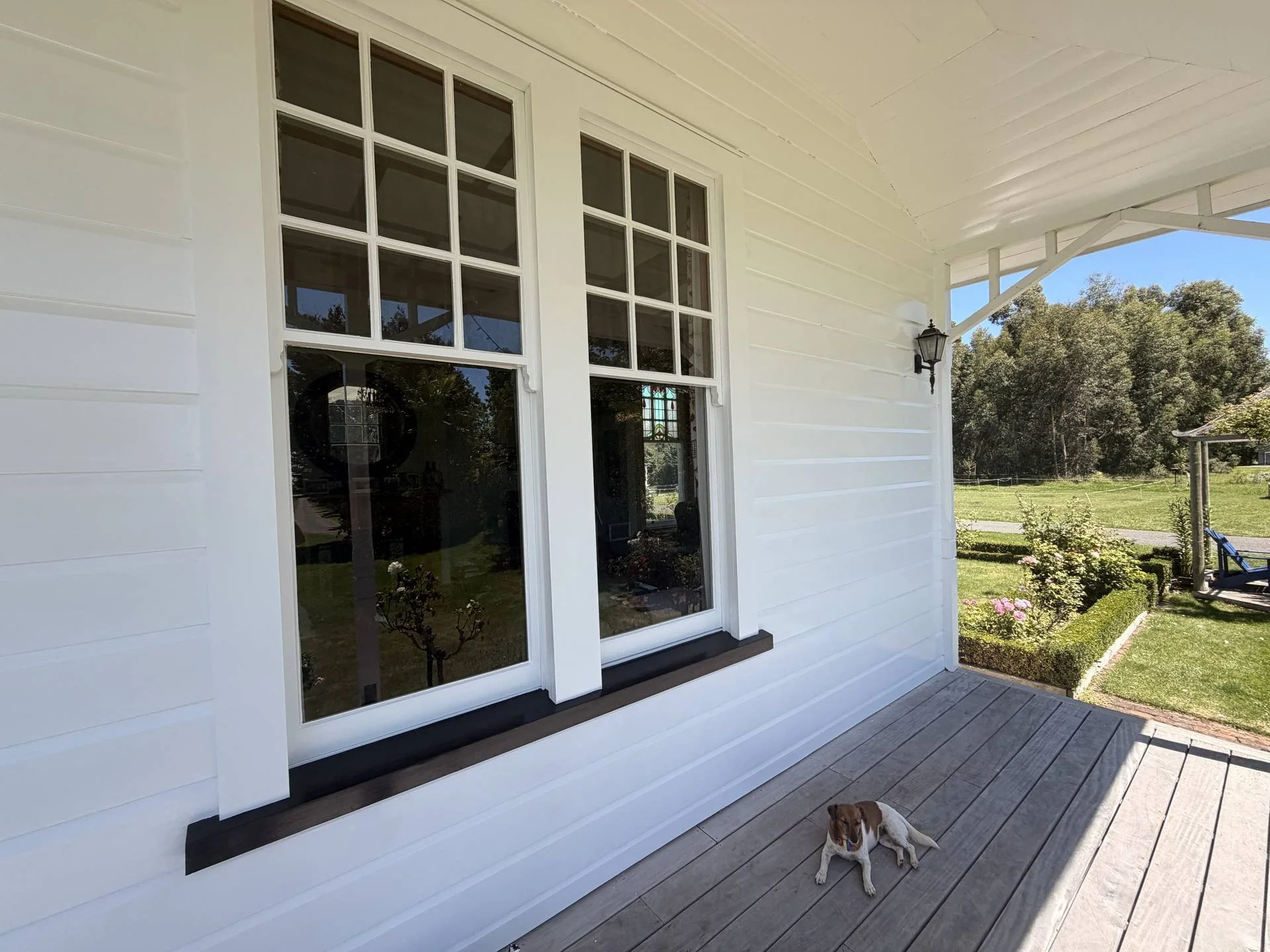
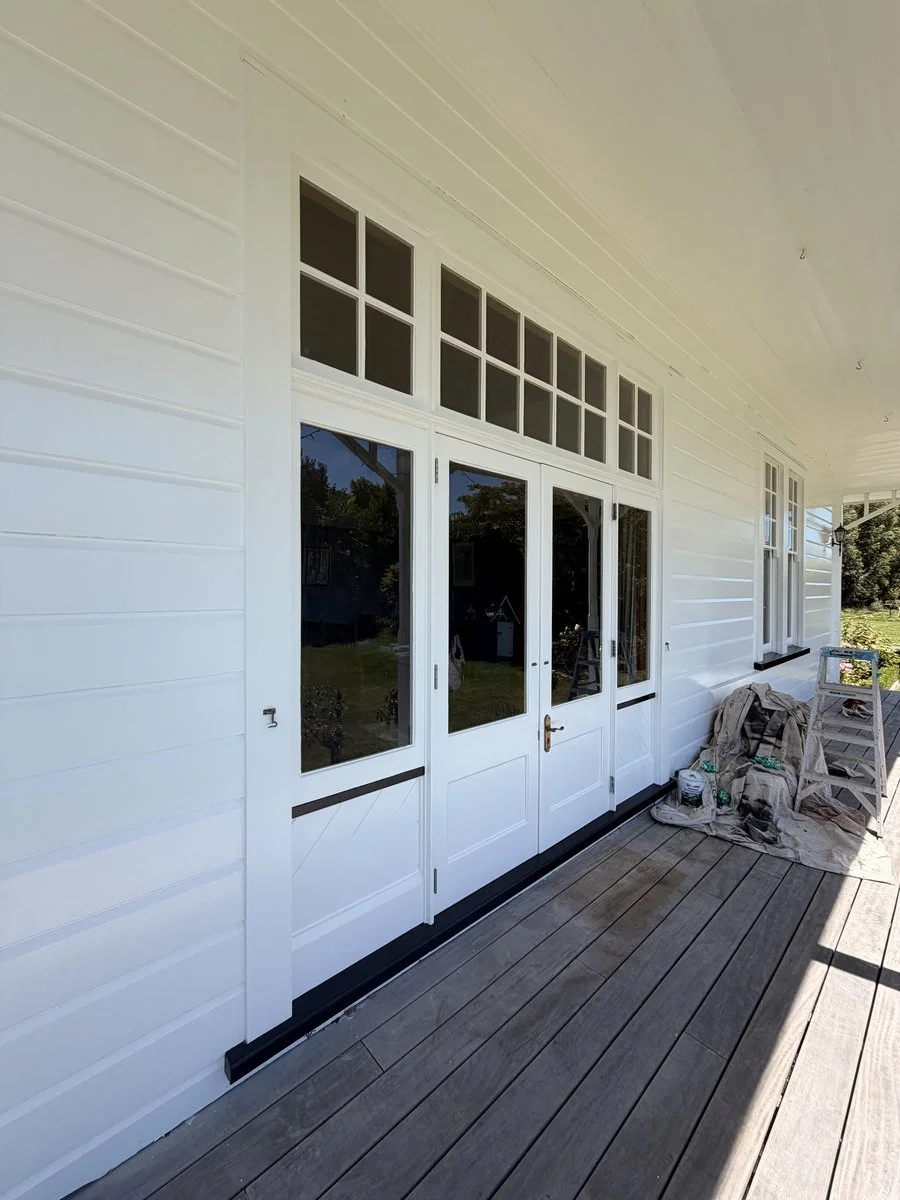
The boards on a villa this age come up rough and fuzzy once they're stripped, and the owners wanted a high-gloss finish on the trim — a finish that shows every imperfection. So after oil priming, we brushed on a liquid filler: a thick, glaze-like coat that flows over all those fine cracks and uneven patches, then sands back beautifully flush. Deeper gouges and nail holes still got filled by hand on top of that. Then we re-primed and laid down the topcoats: three to four coats of white for proper coverage, with the trim in high-gloss black.
Sealing the sash windows with a weathered edge
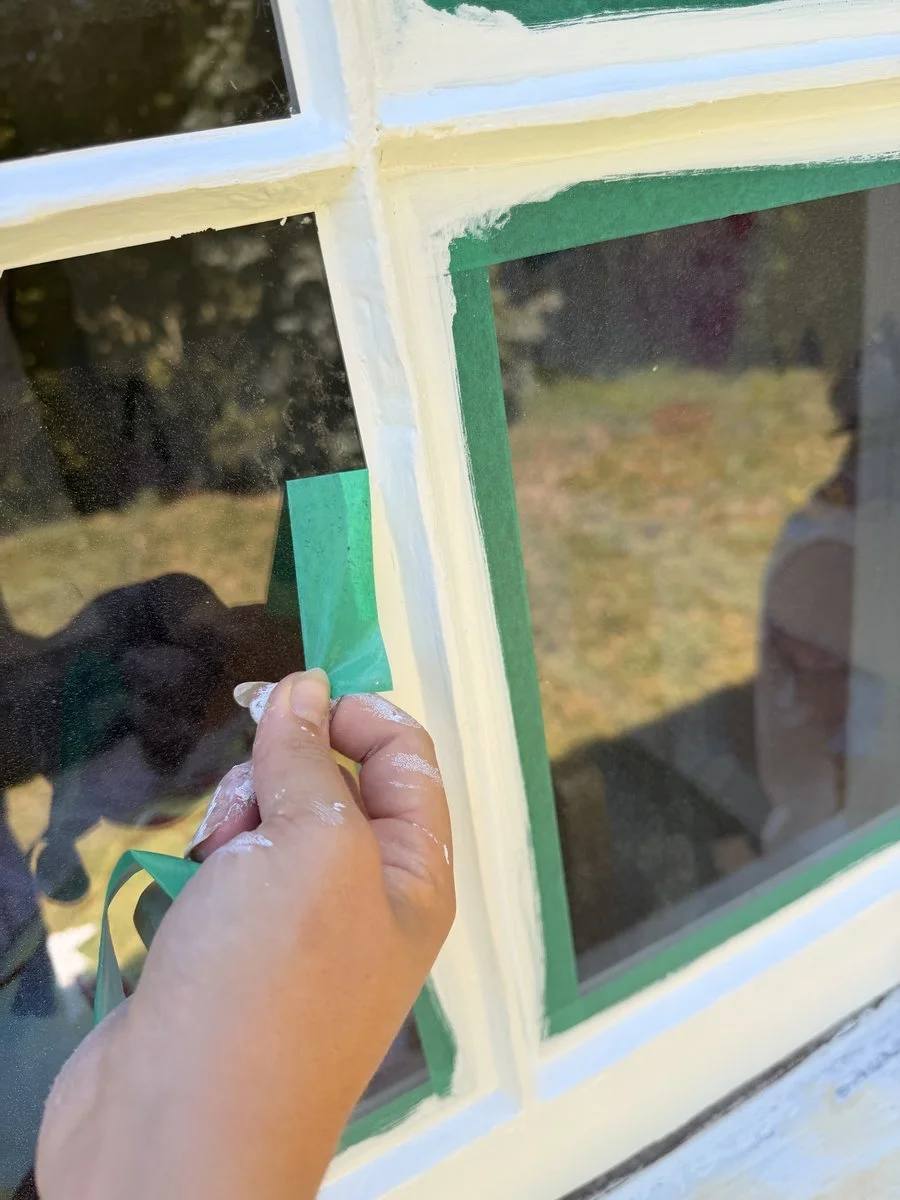
The original sash windows stayed, and we painted them with what we call a weathered edge. We tape each window so the paint runs about a millimetre onto the glass, sealing the little gap between the glass and the putty line so rainwater runs off instead of creeping in behind the frame. Where a gap was wider than that, we gapped it first. It gives a dead-straight line, and it quietly protects windows that have already survived a century.
Got an older home or villa that needs more than a quick coat? We'd love to take a look.