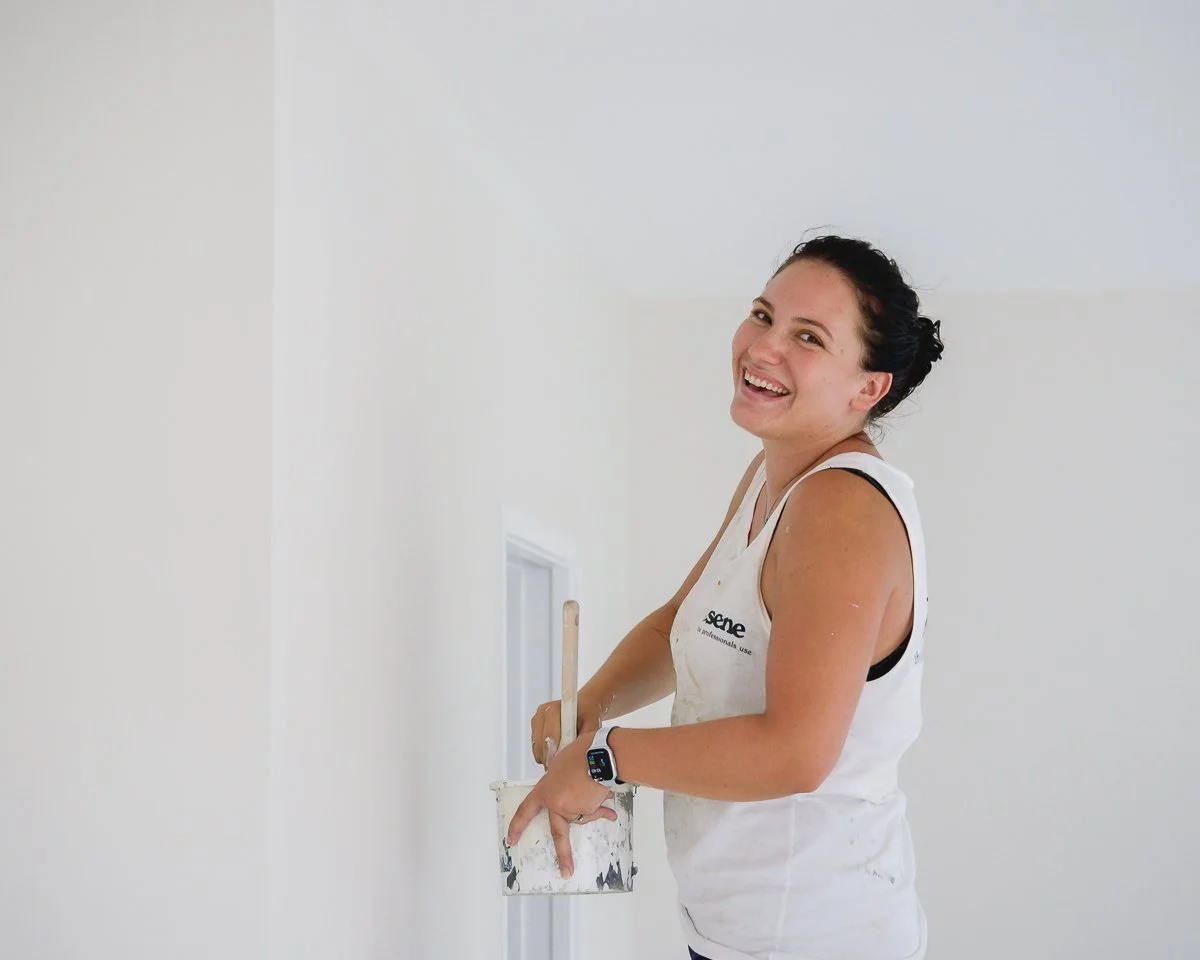
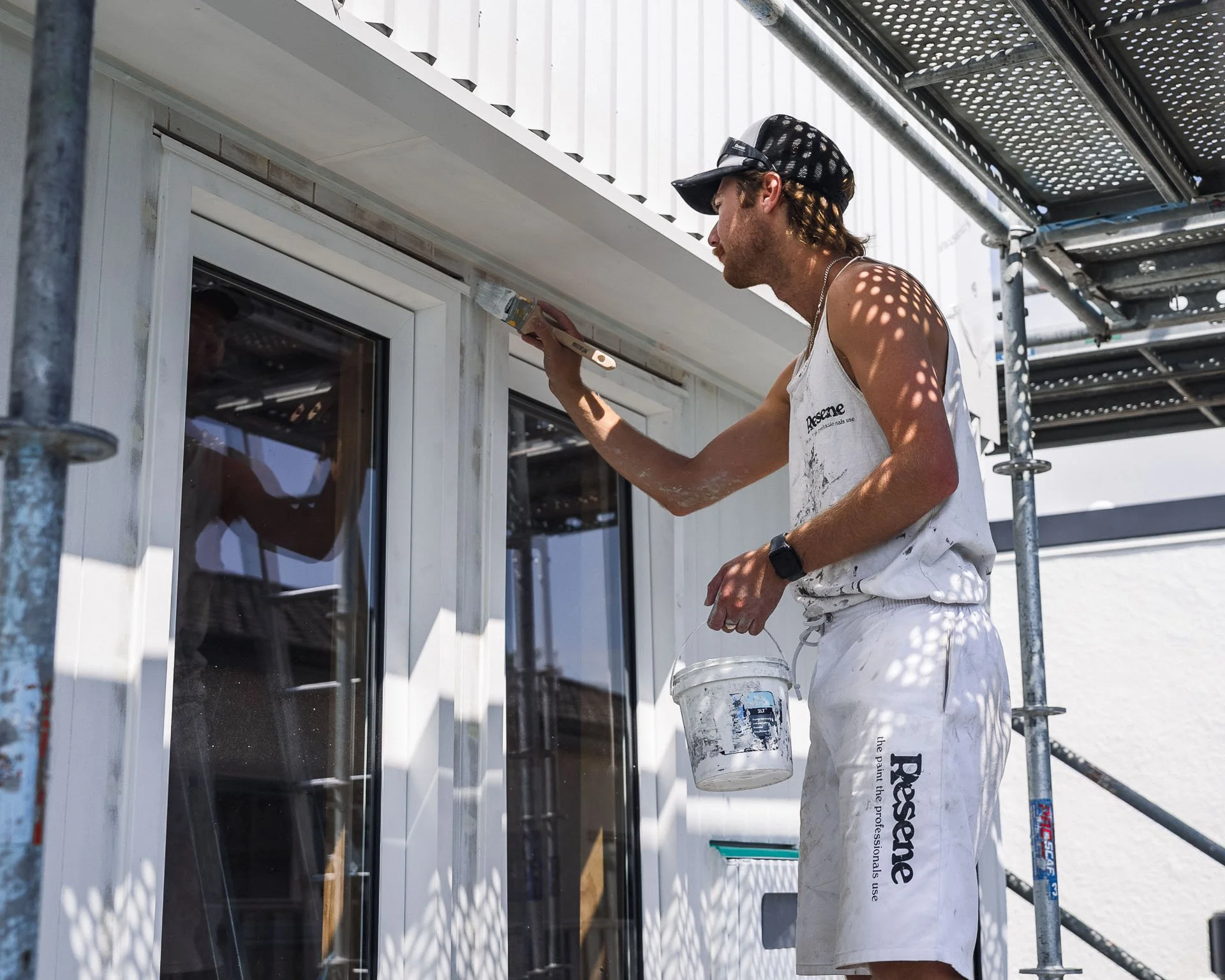
Tim busy painting primer onto the cladding of a new build in Napier
Hiring a painter should feel exciting, not stressful. But if you’ve ever had mixed quotes, vague answers, or heard horror stories from friends, it’s completely normal to feel unsure about who to trust.
I’m Nicole from Bay Decorating, and I’ve been painting homes around Hawke’s Bay for years. One thing I’ve learned is this:
the best paint jobs start with the right questions - before a brush ever touches the wall.
You don’t need to be a tradie to spot the difference between a quality painter and someone who’s just trying to move fast and get paid. These five questions will help you compare painters properly, avoid surprises, and protect your home long after the job is finished.
Our painting services in Napier and Hastings
1. What Prep Work Is Actually Included in This Quote?
This is the most important question you can ask - and the one that’s most often glossed over.
Many quotes simply say “prepare surfaces as required.” That sounds reassuring, but it doesn’t actually tell you anything.
Proper preparation is where the majority of time, care, and cost goes in a paint job. It usually includes things like:
washing the house properly
treating mould and mildew (water blasting alone doesn’t kill spores)
scraping loose or failing paint
sanding the entire surface, not just flaking spots
priming bare timber and repaired areas
filling holes and imperfections (bogging), then re-sanding
sealing gaps and cracks
“Prep is where most of the time goes. Anyone can roll paint on a wall, but the job will only last if the surface is properly cleaned, sanded, primed, filled, and re-sanded before we even think about topcoats.”
— Nicole, Bay Decorating
If a painter can’t clearly explain their prep process, or avoids detail, that’s a red flag. Good painters are happy to walk you through it - because they’ve allowed time for it.
2. How Long Will the Job Take, and How Many People Will Be On Site?
Timelines tell you a lot about how a job has been priced.
A very fast timeline on an older or weathered home often means corners will be cut. Prep work simply takes time - especially on villas, timber homes, or houses that haven’t been painted in years.
It’s also worth asking how many people will be on site and whether that number changes during the job. Adding more painters doesn’t magically halve the time - some tasks can’t be rushed without affecting quality.
Weather is another factor, especially in Hawke’s Bay. A professional painter will build flexibility into the schedule rather than pushing ahead in poor conditions just to stay “on track.”
If a painter promises a large exterior repaint in a surprisingly short window, it’s fair to ask how they’re achieving that.
Read: why painting quotes can vary so much
3. What Happens If You Find Issues Once the Job Starts?
Most homeowners worry about surprise costs once a paint job begins. The reality is, a good painter does most of the investigation before the quote is even written.
At Bay Decorating, a lot of time is spent at the quoting stage checking surface condition, probing problem areas, and asking questions about previous paint jobs. That upfront work reduces the chance of surprises later.
That said, there are some parts of a house you simply can’t see until work starts — especially areas tucked away behind soffits, fascias, and rooflines.
These concealed zones are where issues like hidden rot, water ingress, or failed timber are most commonly found.
When that happens, the process matters just as much as the problem itself.
Rather than pushing on and hoping for the best, the job is paused, the issue is shown to the homeowner, and options are discussed before any extra work is done. That way, the homeowner stays in control of both the scope and the budget.
“We go into a lot of depth at the quoting stage to try and avoid surprises. Most of the time, if something does come up, it’s in areas you just can’t see - like behind soffits or fascias.”
“If we find something unexpected, we stop and talk it through with the client. We don’t just carry on and add it to the invoice later.”
— Nicole, Bay Decorating
4. How Will You Keep the Site Clean and Livable?
Painting can be disruptive, but it shouldn’t feel chaotic.
If you’re living in the home during the job, it’s important to know how the painter manages cleanliness day to day. This includes:
protecting floors, furniture, and joinery
managing dust during sanding
cleaning up tools and debris at the end of each day
keeping accessways clear and safe
On exterior jobs, it also means collecting paint scrapings and keeping gardens, paths, and outdoor areas tidy.
Mess is often a sign of rushed work. Painters who take care of your home usually take care with the painting too.
“One of the first things we ask is where the client would like us to keep our gear for the duration of the job. That way we’re not taking over their home.
We pack down every day, vacuum at the end of each shift, and make sure dust isn’t travelling through the house. People are often living there — it’s not a building site.”
— Nicole, Bay Decorating
5. How Will You Communicate With Me During the Job?
Good communication makes everything smoother.
Before the job starts, it’s worth asking:
who your main point of contact will be
how updates will be given
what happens if weather or timelines change
Clear communication helps avoid frustration and misunderstandings — especially if the job runs over multiple days or weeks.
Professional painters understand that your home is your biggest asset. Keeping you informed is part of the job, not an inconvenience.
“We just talk to people. If the weather changes or something takes longer, we let them know straight away rather than disappearing or pushing through when we shouldn’t.”
— Nicole, Bay Decorating
Why These Questions Matter
These questions aren’t about catching painters out — they’re about clarity.
Good painters won’t be offended by them. In fact, they usually welcome them. It shows you care about the outcome and want the job done properly.
The painters who struggle with these questions are often the ones relying on speed to make money. To move quickly, prep gets reduced, details get rushed, and important steps get skipped. The house might look fine at first - but those shortcuts often show up a few years later as peeling, cracking, or uneven wear.
Taking the time to ask the right questions upfront can save you a lot of money, stress, and disappointment down the line.
If you’re comparing painters around Napier, Hastings, or Havelock North and want help understanding what’s included in a quote, we’re always happy to talk it through — no pressure, just honest advice.