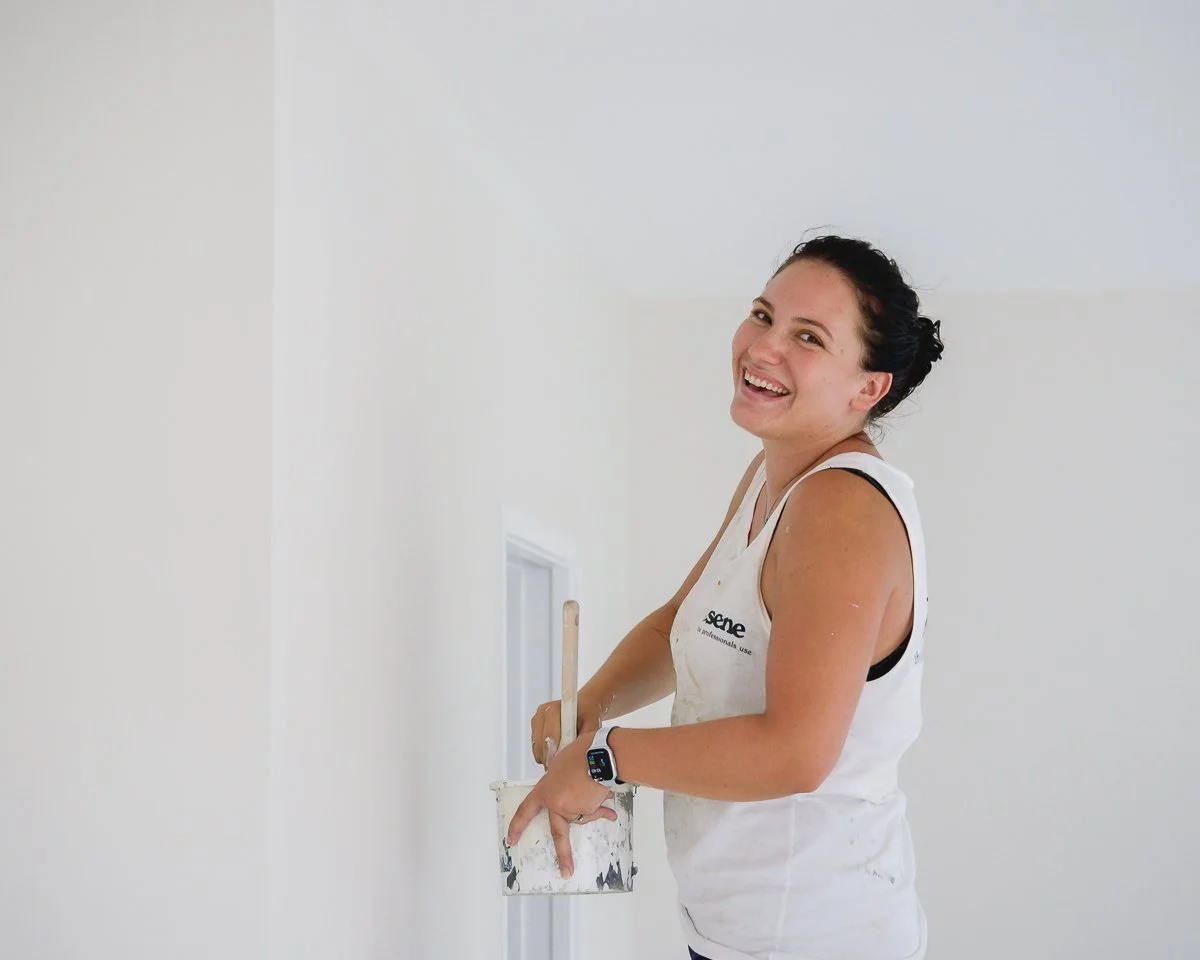
Painting a house on a budget without cutting corners
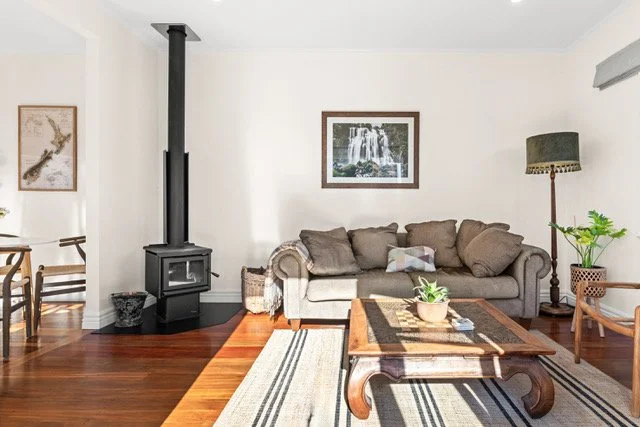
If a painting quote has come in higher than you hoped, we can work with you to bring it down without cutting corners and compromising the job quality. The safe places to make savings are the jobs that don't touch the key prep: washing the house, clearing the rooms, even doing the topcoats yourself once we've prepped. A couple of choices about the job help too. The prep that makes paint last is never what gets cut.
We can work with your budget on a house painting project, but we never sacrifice our quality. This article is about trimming a quote safely to fit your budget. Learning what an average house painting job costs is what our cost guides are for.
By Nicole Howell · Updated October 2026
Where the money goes on a painting quote
Most of a painting quote is the crew's time: the hours spent washing, sanding, filling, priming and painting. The useful question for someone who is happy to roll their sleeves up and get stuck in, is which of those hours could be taken on by you.
If you are looking to save money on house painting and are willing to take on some of the scope yourself, then when we do our site visit, feel free to let us know what your budget is and we can go from there.
If you want the figures, we've written up what house painting costs in Hawke's Bay and what affects the price of a painting quote.
Work you can take off the quote and do yourself
There are three main places we suggest owners can take on: the washing, the clearing, and, if you want to, the painting itself once the prep is done. That is the cheapest way to get a house painted without compromising the result.
Doing the whole job yourself saves the most on paper. It's also where a DIY job tends to come unstuck. Patchy rollering, bubbling and peeling usually trace back to the prep underneath, and fixing them means doing the job again. Splitting the work keeps part of the saving and takes most of that risk away.
Water blast the house yourself
Water blasting is a job anyone can do, so there's no reason it has to be us. Hire a water blaster, give the house a thorough wash. My view is simple: "As long as it's clean, we're happy." The test is your hand. Wipe it along the wall, and if nothing comes off on it and there's no grease or oil left that would stop the paint bonding, it should be clean enough.
A water blast cleans the surface, but it won't get rid of mould. We still treat mould and moss ourselves before any paint goes on, because mould left under a new coat just comes back through.
Move the furniture and take the blinds down
On an interior painting job, moving the furniture and taking the blinds down can add up to five to six hours of our crew's time across a whole job. That's roughly $400-$500 you keep.
It needs no tools and no trade skill, which makes it the easiest saving here.
Do the painting yourself after we've done the prep
We've done a few jobs where we did the prep and the clients were happy to do the painting. Plenty of people don't want to do the prep work anyway. So we come in and do the hard part, the washing, sanding, filling and priming, and you roll on the colour and get the fun bit.
We prefer to do it this way round because the prep is where a lot of the skill and the hours sit. Topcoats over sound, primed prep are much more forgiving. Turn it around, with you prepping and us painting, and the hardest part to get right goes to the person with the least practice at it. Our paint would only ever be as good as prep we didn't do.
Here's roughly how the numbers work. On a typical repaint, about 70% of the labour is prep and about 30% is putting the paint on. Say the labour on your quote comes to $8,000: around $5,600 of that is prep and around $2,400 is painting. Take the painting on yourself and that's roughly $2,400 off, with the part that decides how long the paint lasts still done properly.
Over our prep, the standard is one base coat and two topcoats. Some surfaces need an extra base coat or topcoat, but that's the general rule.
Choices that lower the price without lowering the standard
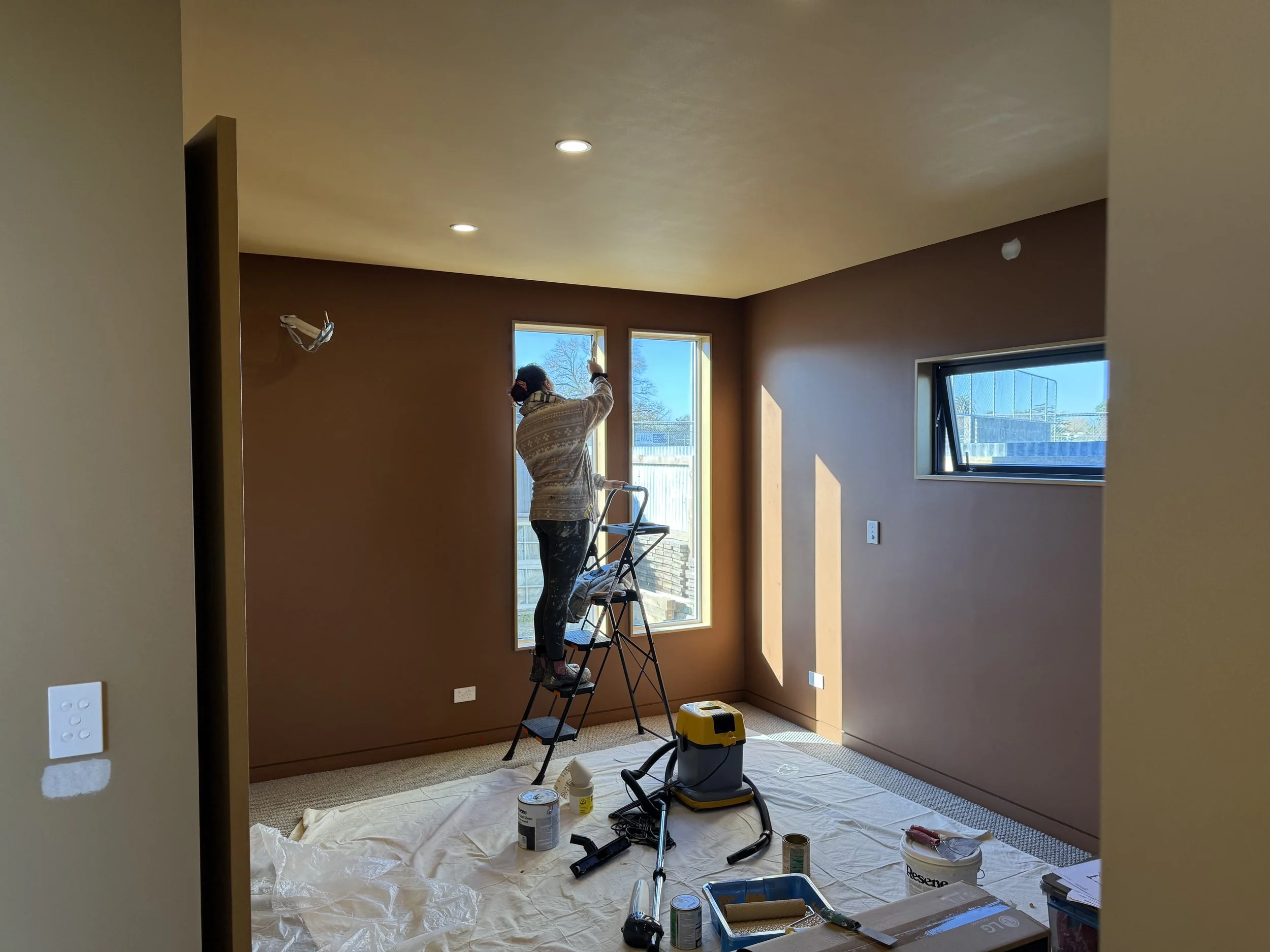
Two decisions about the job itself cut hours without touching the work: staying in your colour range, and keeping scaffold days down.
Colour first. Stay in the same colour range and the new paint covers in the coats we've quoted. Same range doesn't have to mean identical; a shade greyer or bluer within the same tone is fine. Going from brown to white is a different story. It can need two undercoats before two topcoats, and white can need a third or fourth top coat to stop the old colour showing through. That's why our quotes are now based on a colour darker than white, and a light or white colour gets re-priced. We still spot-prime anywhere the sanding takes us back to bare wood, whatever the colour.
Changing your mind halfway costs more again. On the Marewa new build on Herrick Street, the owners switched the cladding from a mustardy brown to red after two coats were already on. We sanded everything for a key and re-coated, which came to about $700 in added hours. Settling the colour before the first coat goes on saves you money in the end (surprise surprise).
Scaffold is the other one. Our mobile scaffold is our own gear and always included. Built scaffold and roof edge protection sit outside our quote, and every day they stand is another day of hire. On a budget exterior repaint on a shaded hill at Coote Road, we used mobile scaffold for most of the house to keep the cost down. A builder was coming in for rot and trim repairs, so I sequenced the scaffold so he and our crew ran back to back. We were in and out of that roofed area in about four days. Scaffold hire is charged for as long as it stands, so every day saved comes off the bill.
The prep we never cut, even on a tight budget
We recommend leaving the sanding, filling and priming to your painter. The washing and the clearing are yours to take. The steps below are the ones a budget never buys out, because the paint is only as good as what's under it. Skip one and you’ll end up paying for the job twice.
Priming. Everything that needs priming gets primed. A topcoat on an unprimed surface doesn't grip, so it peels or bubbles and has to be redone. We prime before we fill, too, because primer shows up the imperfections you'd otherwise miss.
Sanding between coats. A light sand gives the next coat something to key into. Without it, the coats sit on top of each other and let go sooner.
Mould treatment. Even after your own wash, this one stays ours.
Double-filling large holes. Filler shrinks as it dries. Tim had to go back to a classroom refit at St John's where the 10mm screw holes had been filled only once, and the filler had shrunk back and was showing through the paint. A second fill would have saved a second visit.
Cheaper paint isn't a saving either. Thinner paint needs more coats, and the extra labour costs more than you saved on the tins. We use Resene. For the full sequence and why each step matters, here's how proper paint prep protects your home.
When old paint can't just be painted over
Once about 40% of the old paint is flaking, the paint system has failed. A refresh coat won't hold on it, and the surface has to come back to bare timber before it's repainted. No budget changes that. If we see it at the site visit, I'll tell you, and we'll quote the job it actually is.
If there's rot under the paint, a builder fixes it before we paint over it. We raise the risk at quoting time, and we always get your okay before any extra work starts.
So on a tight budget, the cheapest exterior repaint is the one done before the paint gets that far. Where the old paint is still sound, it can be painted over after a proper clean and sand. At Coote Road, the soffits had very little damage, so a really good wash and a refresh coat did them.
Questions about painting on a budget
Is it cheaper to paint my house myself?
In cash, yes, because labour is most of the bill. In the result, not always. Most DIY trouble starts in the prep, and redoing a failed job costs more than doing it once. The middle route is prep-only: we do the hard prep and you do the topcoats.
Does supplying my own paint save money?
Rarely. Our quotes already include the paint and we use Resene for a reason: it's good quality. Supplying your own paint takes no hours off the job, and if it's a cheaper, thinner paint it can require more coats, which adds labour. That labour addition often far outweighs the paint savings.
What prep work is needed before painting an exterior?
The usual sequence is: wash the house, treat the mould and moss, scrape and sand back any loose paint, prime, fill and gap, sand the filler smooth, prime again, then the topcoats, with a light sand between coats. Timber windows get re-puttied where the old putty has gone. Where about 40% of the old paint has failed, the surface comes back to bare timber first.
Can you paint one side of the house at a time to spread the cost?
Yes. If your budget works better a wall or a room at a time, we can plan the job in stages over time, and each stage is invoiced on its own as a separate small job. It spreads the cost rather than lowering it, so we agree the stages before we start.
Getting a quote built around your budget
If you're painting a house on a budget, tell us the number up front. At the site visit I'll go through the quote with you line by line and show you what you could take on yourself. Quotes are free and no-obligation, and we'll get back to you within 24 hours. Get in touch with Bay Decorating to book a site visit.