
Painting an exterior in winter: what goes wrong, and what it takes to get it right
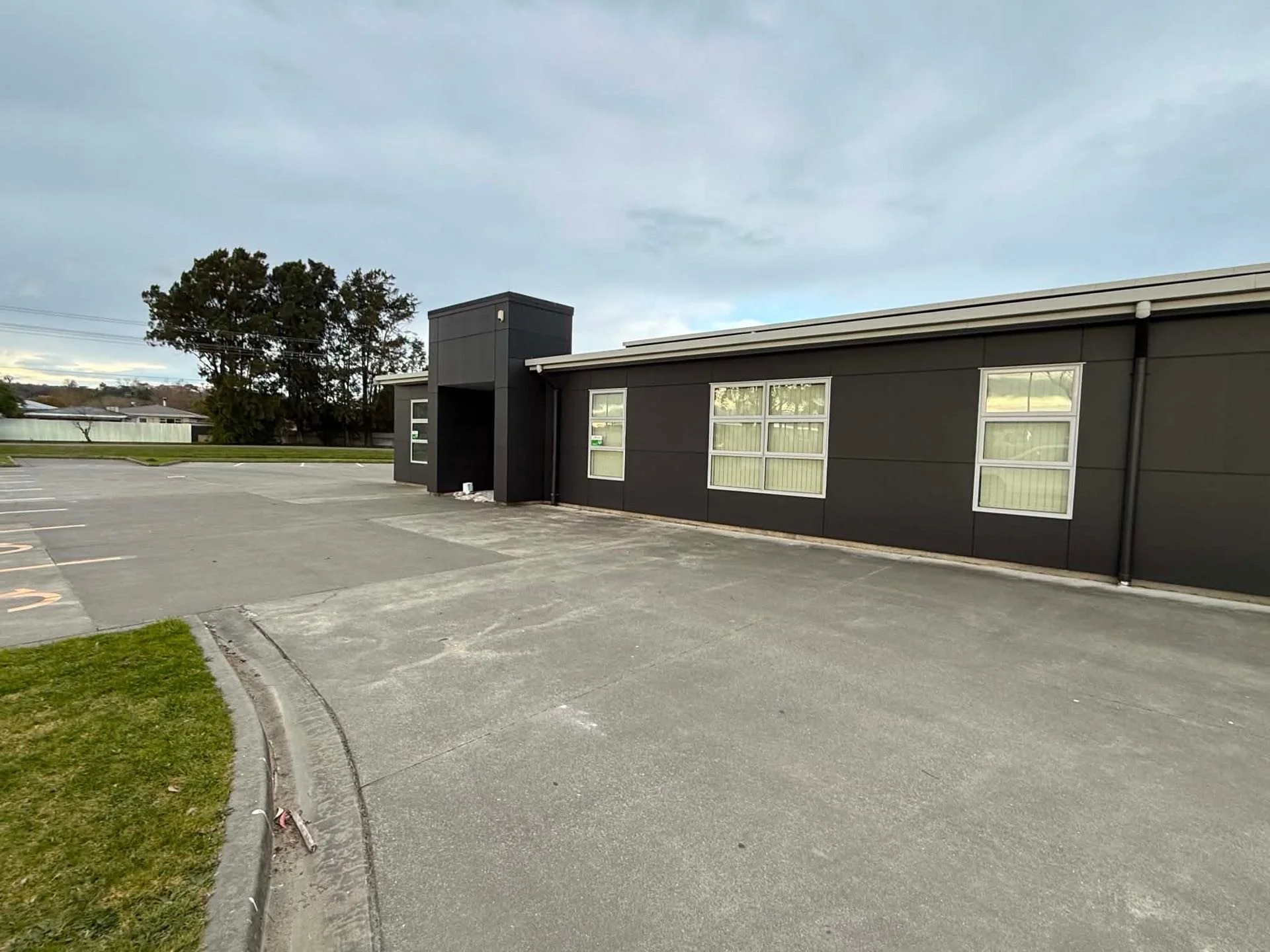
Weighing up an exterior repaint this winter, or staring at one that has gone wrong? Yes, you can paint an exterior in winter. What catches people out is drying speed rather than cold, and a dark colour makes every part of it harder. I know because we painted a near-black commercial building through winter 2026 and it took us four or five goes to get right. This page covers the conditions I work to, the ways winter paint fails, and the fix for the one that frightens people most.
Nicole Howell, co-owner, Bay Decorating. Napier and Hawke's Bay. Last updated August 2026.
Can you paint an exterior in winter?
Yes, on the right day, with the right expectations. A winter exterior takes longer than the same job would in February. The usable window is short, maybe five hours before the dew comes down, and you lose days to rain that summer would not take off you. Winter exterior painting is planned differently from summer work; most of the trouble I see starts with a summer job squeezed into a cold week. If you are still deciding whether your place needs doing, how often to repaint is the better starting point.
How cold is too cold to paint outside?
Six degrees is my floor, and the day has to be dry, with no frost on the ground when we start.
Dry, no frost, and warm enough to cure
The number matters less than what it protects, which is curing time. Paint needs warm, dry hours to cure, and winter attacks both ends of that: cold stretches the curing, the short day cuts the hours. Then the dew arrives. A wall that took paint at two in the afternoon can be wet again by nine at night, and paint that gets wet before it has cured is where every winter problem in this article starts. So the question is never air temperature on its own; it is whether the day gives your paint enough dry hours before the wet comes back.
That is why a ten degree afternoon after a hard frost is a worse painting day than a six degree morning that stayed dry. The frost day starts with a wall that is wet and colder than the air, and by the time it has dried off, most of the curing window has gone with it. It is also why the published numbers settle nothing: most manufacturers put the minimum at ten degrees, and winter grade products claim they cure down to two; both are lab numbers, and neither prices in frost or dew. Six degrees, dry, with no frost on the ground is where it balances out on a real wall. If the ground is still white at eight, that is your answer.
What a winter-grade additive actually does
A winter grade additive exists for exactly that window. It lets paint cure at a lower temperature, clawing back hours the cold takes off you. Coote Road is the clearest example we have: the house sits up a hill that barely gets a lick of sun, and standard paint was still wet the next morning, dripping off the walls. On a budget exterior repaint like that one, the additive is what made the job possible at all, because the problem there really was temperature. It does not turn a cold, damp day into a good one; if dew is about to land on uncured paint, an additive changes nothing.
Why is my new paint patchy, streaky or fogged?
In winter, the usual cause is paint drying at the wrong speed, and on our commercial job we managed it in both directions inside one week. The building was close to black and had not been repainted in about twenty years. I told them winter was a bad idea for that colour, because white and off whites you can get away with, but black shows everything. The date could not move, so we took it with the risk said out loud.
We started by doing what winter advice tells you: begin later, let the frost dry off, paint through the warm part of the day. On a near-black wall that meant painting in full sun, and the aluminium corrugated iron side took sun from eight in the morning until five at night. The paint skinned over faster than Jesse could lay it off. You could see the steam coming off it, and every lap where the wet edge had gone showed as a line and a patch, all the way around. The paint was fine and the film was fine; it went off faster than a person can work. On a dark wall you need at least some cloud, and a Hawke's Bay winter is quite capable of handing you a clear week instead.
So we sprayed it, reasoning that more paint on the wall means a longer wet edge. It came out worse, fogged in the corners and dried badly overnight, from the same cause. We spray where it is right; this was a rescue, and it did not work. Both defects came from trying to out-run the real winter problem. It caught us anyway.
What are the brown streaks running down my new paint?
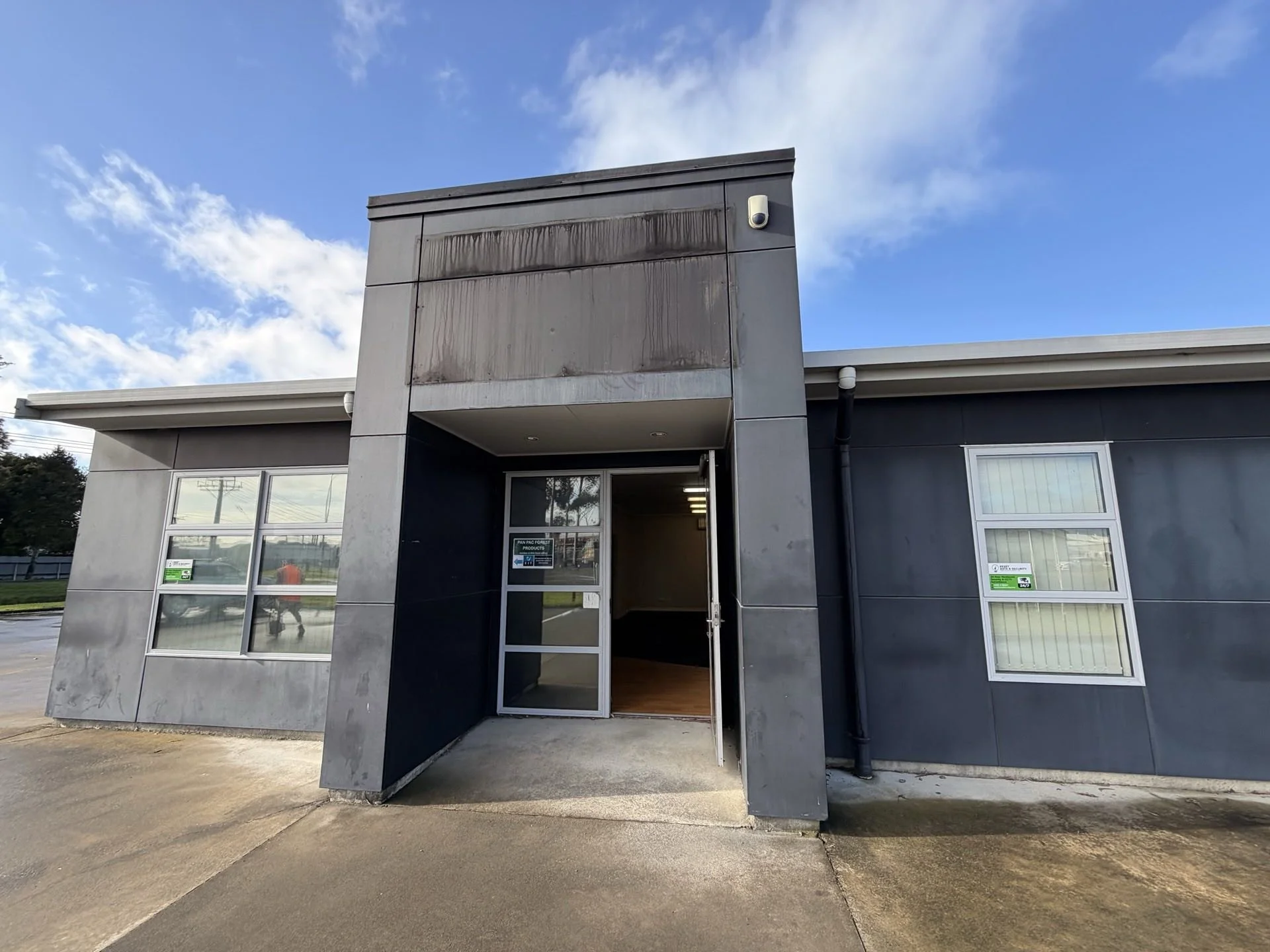
Surfactant leaching. The soaps in the paint have been drawn out by moisture, run down the wall, and dried there as a stain, and it is cosmetic rather than a failure. It happens when you paint through good winter days and the temperature falls away hard overnight. Condensation wets a film that has not had long enough to cure, and the soaps come out with the water. We call them crying walls on site. It is the same thing you see in bathrooms, anywhere heavy moisture comes through. The building had already shown us: on the before photo there are drips down the wall behind the existing signage, left by whoever installed it. Same mechanism, same wall.
How do you get rid of surfactant leaching?
You wash it off, and then you keep washing it off. Here is the routine from our winter job: how often, for how long, and how you know when you are done.
Wash between every coat. On the winter job the rhythm was coat, wash, let it dry, next coat, wash again. Never paint over the streaks while they are sitting there, because you would be coating over soap deposits and they will keep staining through. Washed down and left to dry properly, the wall dries back to normal; left wet, the streaks form again. That is why we rinse on days the wall can dry off rather than leaving the weather to do it.
Once the final coat is on, you are still not finished. Fresh paint keeps releasing surfactants, so hose the building down three or four times a day, for up to a week or two, until they stop coming through. We had done two coats with a wash between them and were still going back to rinse that building daily. Skip the washing and the surfactants that have already come through stay put and keep staining.
You will know it is working by what the wall does under the hose. It foams. It looks like you are spraying soap at the building, because you are, and at its worst it looks like the inside of a dishwasher. That foam is the test. You keep washing until the foam stops and only water runs down the wall. When that happens, you are done, and the streaks stay gone.
None of this is damage repair, because there is no damage. Washing takes nothing off the wall but the soap. It looks alarming, and it is the most fixable problem in winter painting.
What time of day should you paint in winter?
On a dark wall that takes sun, earlier than the standard advice says. The usual rule is ten till three, once the frost has burned off, and it assumes cold is the enemy. On a dark wall the sun is the enemy, and starting later hands it more of the day.
The answer was the opposite. The first early start was half past seven. It was still cold, so I used a winter grade additive, and I worked in the shade instead of chasing the sun around the building. That got it close. The one that finished it was earlier again: I waited for a morning with no frost and started at seven, in the dark. It had to be dry and above six degrees, and I found one morning where it was, and rolled the whole thing out by hand. That was our fourth or fifth try, after a lot of trial and error and a lot of wasted paint.
Working early in the shade does two jobs. Nothing dries out in front of you, and the fresh section gets the longest run at curing, the sun following the roller instead of racing it, before the evening dew lands. Dew on uncured paint is exactly what starts the crying walls.
The client's date was fixed by tenants moving in after a vacancy, a fair call, and we stayed on it until the building looked the way it should.
Common questions about painting in winter
Is surfactant leaching harmful, or has the paint failed?
Neither. Surfactant leaching is cosmetic: the brown or tan streaks are water soluble ingredients that have come out of the paint, and they wash off. The film underneath is sound and its life is not shortened.
Will the brown streaks come back after I wash them off?
Yes, for a while, and that is expected. Fresh paint keeps releasing surfactants for a fortnight or so, which is why the rinsing is spread over days rather than done once. Once the wall stops foaming under the hose and only water runs off, it has finished.
How long does exterior paint take to dry in winter?
Longer than the tin says. Manufacturer dry times are quoted at around eighteen degrees, and a Hawke's Bay winter day is not that. Recoat times stretch, so a job that would take a week in summer will not take a week in July.
Does painting in winter cost more?
Materials cost the same, and the quote is usually the same too. Winter costs time. A job booked in the middle of winter takes longer, with days lost back and forth to weather, and the timeline should be planned around that from the start.
What if my repaint date cannot move?
Tell us early, because a fixed date changes how we plan the job rather than whether we take it. On the winter building in this article the date was set by a tenancy, so we planned around lost days and worked to the conditions instead of the calendar.
Should you just wait until spring?
Often, yes, and if that is the honest answer for your place we will say so. Three things decide it: the colour you are going to, which way the walls face, and whether your date can move. A mid tone on a sheltered southern wall in July is a different proposition from black on a wall that takes sun all day.
The catch with waiting is the calendar. Spring and summer book out early, and a big exterior needs three or four months of notice, so a winter enquiry is usually a booking for a couple of months away rather than a job starting next week. Deciding now and painting later is often the best of both.
If you want eyes on your place before you decide, our exterior painting page covers how we approach exteriors, and you can get in touch to book a look.